As millions gathered to bid farewell to Ayatollah Ali Khamenei on July 6, 2026, the Iranian capital faced a monumental logistical challenge that became a showcase for urban waste management.
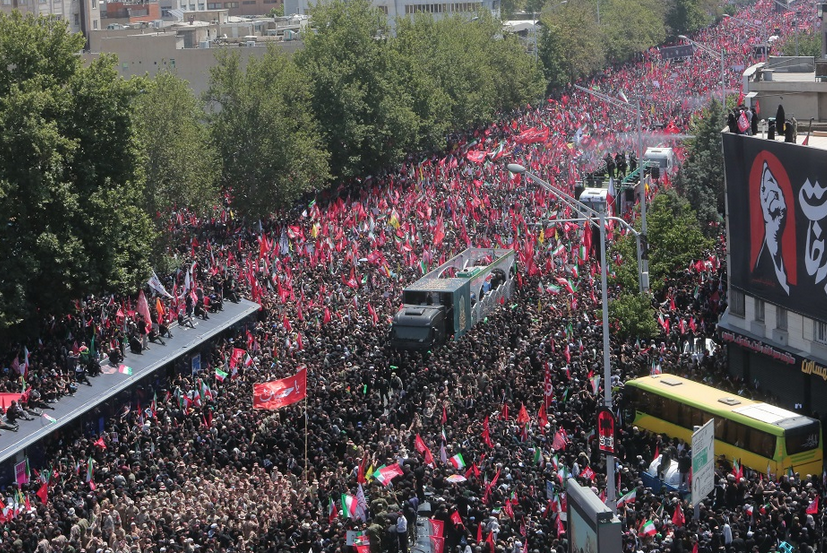
The images were breathtaking: a sea of mourners stretching for 20 kilometers through the streets of Tehran, from TehranPars Square to Azadi Square, along Enqelab Avenue. Millions had come to pay their respects to the late Supreme Leader Ayatollah Seyyed Ali Khamenei, whose funeral became one of the largest gatherings in modern history.
But beneath the emotional spectacle lay a formidable logistical puzzle. How do you manage the waste of millions of people, pouring out food and drink with spontaneous generosity, without letting the city descend into chaos?
The answer, it turned out, was a combination of massive municipal mobilization and remarkable civic discipline.
An Army of Cleaners
The Tehran Municipality rolled out an unprecedented operation. According to Davoud Goudarzi, Deputy for Urban Services and Environment, the city deployed 7,434 sanitation workers, supported by 366 specialized vehicles and equipment. More than 1,250 waste containers were placed along secondary roads, and 86 tons of garbage bags were distributed to workers and volunteers.
The cleaning of the city of Tehran from the garbage and waste of the funeral ceremony of the Leader of Iran began immediately after the ceremony ended and the crowd participating in the ceremony dispersed by the Tehran municipal administration.
The numbers tell the story: 20 kilometers of routes were continuously cleaned and washed. By the end of the day, 12,000 tons of waste had been collected and transported.
Mohsen Ghazatlu, head of the Tehran Waste Management Organization, described a three-ring cleaning system. The first ring surrounded the Imam Khomeini Mosalla and the funeral route itself, where crowds were densest. The second and third rings extended outward to cover surrounding neighborhoods and transit points.
A Civic Act of Faith
But the operation's success was not simply a story of municipal might. Equally remarkable was the behavior of the mourners themselves.
Iranian media emphasized the importance of maintaining cleanliness during religious ceremonies as both a civic and spiritual duty. "The streets of Tehran are the stage for a grand ceremony, but also an example of social responsibility," one outlet noted.
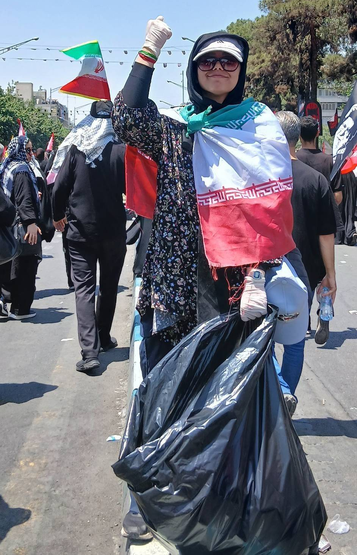
Some funeral attendees spontaneously collected trash from the ceremony.
Many participants carried their waste in plastic bags, depositing them at designated collection points rather than leaving them on the streets. Volunteers and municipal workers reported that the crowd's cooperation significantly eased the burden of cleanup.
This civic discipline reflects a broader cultural context. In Iran, religious gatherings have increasingly become opportunities to promote environmental consciousness. The "Green Muharram" campaign, launched ahead of the 2026 mourning season, specifically encouraged the use of reusable containers, source separation of waste, and the concept of "green vows" — environmentally sustainable religious offerings .
Lessons for Megacities
The Tehran funeral operation offers valuable lessons for other major cities facing mass gatherings. The combination of advanced planning, overwhelming logistical capacity, and public cooperation created a model that was both effective and environmentally conscious.
The system relied on mobile collection points, with waste transferred from smaller containers to larger "rolling" receptacles located outside the most crowded areas [source: Iranian news agencies]. This allowed for efficient removal even where vehicle access was impossible.
Additionally, 1,600 security personnel and 430 specialized equipment units were deployed to monitor safety and prevent accidents, while 30 ambulances were stationed at key points along the route.
A Clean Exit
As the last mourners departed and the city began to return to normal, the streets of Tehran were remarkably clean. The operation demonstrated that even the largest gatherings can be managed sustainably, provided there is political will, logistical planning, and, crucially, a populace willing to participate.





_1783532104.png)



Comment
Reply