


03 Jun 2026
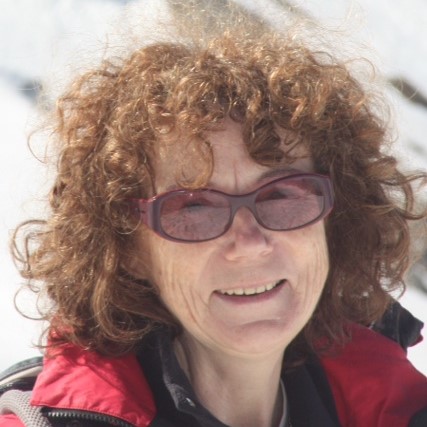
Irene Quaile
Protecting the climate is protecting the environment – and keeping our planet liveable. If we don't halt runaway climate change and reverse the warming trend, a lot of us may not be around to worry about the rest.
The title - the UN campaign slogan - has it all. There is no separating environment and climate. This June 5th, when the UN asks us all to focus on the world around us, we acknowledge that the changes we have made – and go on making – to our climate are having devastating effects on the environment. Not that climate change is the only environmental threat. We humans have endless potential and ingenuity when it comes to harming the world we live in. Pollution, over-use of limited natural resources, habitat destruction... But climate change has emerged as an overriding kind of threat, looming over the planet. Protecting the climate is protecting the environment – and keeping our planet liveable. If we don't halt runaway climate change and reverse the warming trend, a lot of us may not be around to worry about the rest.
How much heat can the planet take?
The UN writes in its campaign message:
“The planet doesn’t argue. It doesn’t negotiate. It sends signals—rising seas, raging wildfires, heatwaves, melting glaciers.”
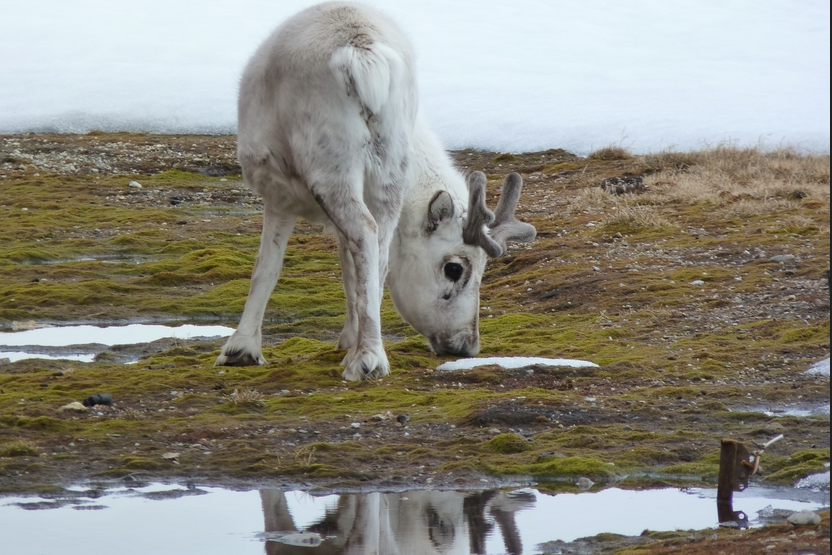
Since 2007, I have been following developments in the icy regions of our planet, the Arctic in particular, in my Ice Blog. In those 20 or so years I have seen devastating changes in those regions and heard first-hand from the the people who live there how those changes are affecting them and the animals and plants around them.
The Arctic is warming more than four times as fast as the rest of the planet. Scientists have been telling us for quite some time now that a rise in global temperature of 1.5°C was the upper limit to sustain our ice and snow.
The UN appeal for World Environment Day states clearly that we are now crossing that 1.5°C upper limit, set at the Paris Climate Conference in 2015.
For decades, scientists and campaigners have been telling the world about the risks of climate change. As the UN puts it: “warnings, targets, distant deadlines”. Sadly, all that seems to have been too distant to convince us all of the imminent nature of the threat and the need for immediate action.
“Too often, the response has been clouded by noise: delay, distraction, denial,” says the UN. Too right.
I am writing this in Germany, at the heart of Europe, the continent which is warming fastest. We have had May temperatures of up to 35 degrees here, with western Europe suffocating under a “heat dome”. My native GB has seen all the temperature records broken. Wildfires in Scotland, known for its cool, rainy climate? Calls for air conditioning in the temperate UK?
An urgent call from the United Nations
In his World Environment Day message, UN Secretary-General Antonio Guterres writes:
“ The warning signals are everywhere:
The past eleven years have been the eleven hottest on record.
And the damage goes far beyond rising temperatures – from polluted air to degraded land, collapsing ecosystems, and vanishing biodiversity.
Harming health, destroying homes and deepening hunger.
The world is heading for a temporary overshoot above 1.5 degrees.
Every fraction of a degree brings greater harm – especially to the most vulnerable.”
_1780467553.jpg)
Alas, that 1.5°C which should have been the absolutely upper limit is already being passed.
“Our task is to make that overshoot as small, as short, and as safe as possible – and rapidly bring temperatures back down, the UN writes.
For a long time, I hoped we would still make that target. To see it slipping away and have science and the UN confirm that we can only hope to limit the damage has been disheartening – to put it mildly. The goalposts are shifting.
Adaptation, Mitigation, Survival
I remember a first interview visit to the headquarters of the UN climate secretariat (UNFCCC) in Bonn, back in the 1990s, when I worked with the German international broadcaster Deutsche Welle. At that time, I asked my interview partner whether a focus on “adaptation” to climate change would not take attention away from “mitigation”, the need to cut emissions, halt warming and so make adaptation unnecessary. Naive? Or just too optimistic?
Thirty years on, climate change impacts have way overtaken the speed at which we can adapt. Storms, floods, fires, rising seas, heatwaves, biodiversity loss... and, far from being a distraction, adaptation has become essential to protect lives around the globe.
But that in itself is not enough. We know what we have to do – and, yes, we should have done it long ago. Let's turn again to the UN Secretary-General:
“That means slashing emissions.
Accelerating a just transition away from fossil fuels and towards renewables – the only sustainable path to lower costs and to real energy security.
Cutting methane – one of the fastest, cheapest ways to limit near-term warming.
Protecting forests, land, and seas.
Helping communities adapt to the devastating impacts already here.
And it means fulfilling climate finance promises to developing countries – to save lives, protect livelihoods, and strengthen economies.”
_1780467644.jpg)
Reasons to be cheerful
But there is good news:
“Beneath the noise, another signal is rising. Solar panels stretch across rooftops. Wind turbines line the horizon. Cities are being redesigned for people. Forests are being replanted. Climate solutions are taking root in every corner of the planet.”
That is the real message of this year's World Environment Day.
Think tanks like the global climate science and policy institute Climate Analytics have published papers detailing how the world can get back on track:
Rescuing 1.5°C: new evidence on the highest possible ambition to deliver the Paris Agreement shows how the overshoot could be limited to the lowest possible level and warming returned to well below 1.5°C by 2100.
Emissions are still rising and global temperatures soaring, the experts write. On the other hand, they show that in the last five years or so renewable energy and other zero-carbon technologies have decreased substantially in cost, become far more cost-competitive than anticipated and can be scaled up faster.
This is the good news which can help us get back to the 1.5°C upper limit. Climate Analytics havecome up with a “Highest Possible Ambition” scenario, starting from current emission levels and energy market dynamics to “achieve the safest possible temperature outcome within physical, technological and economic feasibility limits.”
This kind of work provides bridges between what climate science is telling us and how we can in practice improve lives and livelihoods across the globe by cutting emissions.
The unwitting facilitator of Green Energy
In a post on the Iceblog, I argue that the US war on Iran and the resulting closure of the Strait of Hormuz have done a better job at raising awareness of the dangers of fossil fuel dependency than a library of papers on the subject. Ironically, amidst all the death and destruction he has wreaked, the “drill baby, drill” President may have done the green energy revolution a big favour.
The closure of the key fossil energy transport corridor through the Strait of Hormuz, provoked by the US war on Iran, has thrown world energy markets (and much more) into chaos. Countries relying on oil and gas from the Gulf region have been left high and dry. While some turn to dirty fossil fuel coal for a short-term solution, clearly the key message is that renewable energy, produced close to home, is the way to go.
In an interview with the Guardian, Fatih Birol, the executive director of the International Energy Agency (IEA), argue that “the oil crisis triggered by the Iran war has changed the fossil fuel industry for ever, turning countries away from fossil fuels to secure energy supplies”.
The man widely considered the world’s leading energy economist said a key effect of the US-Israel war on Iran was that countries would lose trust in fossil fuels and demand for them would decline.
_1780467903.jpg)
It's up to us
Meanwhile, let's not wait for our governments to save the world. We each have to do our bit- and we can. This is not somebody else's problem. It's NOT something we can NOT do anything about. Every step we walk, every time we cycle, use public transport, electric vehicles, is a step towards reducing emissions and halting the warming that is threatening our future (and our today). Solar panels on rooftops, balconies and elsewhere reduce the burning of fossil fuels for electricity. Of course climate action is not just about energy. What we eat, what we wear, what we buy – and what we don't buy - every bit of waste we avoid – has an impact on our environment and our climate.

I was invited to write this piece for Tired Earth. Thank you! This tireless effort by the younger generation to protect our exhausted planet gives me hope. My generation has caused a lot of damage. We might not have realised it at the time, but no-one can honestly deny that our daily behaviour affects the planet we live on and is threatening to make it uninhabitable for future generations.
Let us tread lightly on the planet that sustains us.
As Antonio Guterres says: “This is the moment to act – for our environment and for our future”
Every day should be World Environment Day. And every day should be Climate Action Day.
Source : iceblog.org

The best of Tired Earth delivered to your inbox
Sign up for more inspiring photos, stories, and special offers from Tired Earth
By signing up for this email, you are agreeing to news, offers, and information from Tired Earth. Click here to visit our Privacy Policy.


Comment
Reply