Environmental degradation in Palestine is closely linked to the situation of Palestinian women.
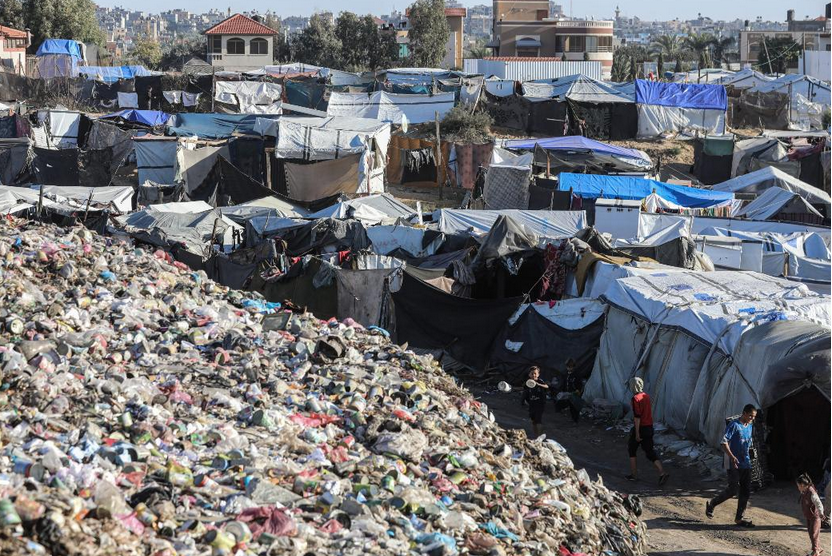
In a statement released this weekend, the Palestinian Ministry of Women's Affairs asserts that the right to a safe, healthy, and sustainable environment is a fundamental human right. But on the ground — in the occupied West Bank as well as in the Gaza Strip — this right is violated daily, and it is women who suffer the most direct consequences.
Rural Women on the Front Line
Mona al-Khalili, Minister of Women's Affairs, explains that the destruction of land and natural resources in Palestine hits rural women first. She reminds us that these women are the pillars of local food security and agricultural production. When a field is confiscated, when a tree is uprooted, an entire system of subsistence collapses — and with it, the autonomy of thousands of families.
"Environmental degradation in Palestine is closely linked to the situation of Palestinian women," the minister said, as quoted in the statement.
Gaza: 2.2 Million People Exposed to Hunger
In the Gaza Strip, where war has ravaged infrastructure and drinking water networks, the humanitarian crisis has reached catastrophic levels. According to figures put forward by the ministry, food prices have soared by more than 200%. The direct consequence: approximately 2.2 million Palestinians are now exposed to heightened risks of famine and malnutrition.
Among them are nearly one million women and girls. And an even more alarming statistic: some 160,000 pregnant or breastfeeding women are suffering from acute malnutrition — a dangerous condition for both themselves and their newborns.
The near-total collapse of water and sanitation networks further worsens the situation. Women and girls, traditionally responsible for domestic chores and childcare, are exposed to increased health risks: waterborne diseases, infections, and obstetric complications — all within a context of persistent shortages of health services.
West Bank: Up-rootings and Settlements
In the occupied West Bank, the threat is different but equally systemic. The ministry points to settlement policies and land confiscations, which it describes as the "primary threat to the Palestinian environment."
The figures are telling. In the first half of 2026 alone, more than 9,000 trees were uprooted or damaged. Seven new settlement outposts were established, and plans concerning 34 settlements were approved.
Yet approximately 115,000 families in the West Bank depend on agriculture as their main source of income. Among them, more than 72,000 farming and pastoral families are in need of urgent assistance to preserve their livelihoods. Given that it is mostly women who ensure the continuity of these farms — in the absence of men, who are often detained, wounded, or deceased — the scale of the damage becomes clear.
An Appeal to the International Community
Faced with this reality, the Ministry of Women's Affairs does not merely raise the alarm; it demands action.
In its statement, it calls on the international community to assume its legal and moral responsibilities, and to hold Israel accountable for the damage caused to the Palestinian environment and natural resources.
The ministry also advocates for the strengthening of policies that integrate environmental and climate issues through a gender perspective — in other words, to stop treating ecology and women's rights as separate issues.
Finally, it calls for concrete measures to support the resilience of Palestinian women and to promote what is known as "environmental justice": the idea that the most vulnerable populations should not bear the costs of a degradation they did not cause.








Comment