



16 May 2026

Tired Earth
By The Editorial Board
More than 60% of the United States is experiencing drought conditions, with more than 20% in an extreme drought. Andrew Ellis, a climatologist at Virginia Tech said the current conditions are among the worst in decades because the combination of intensity and aerial coverage is rare. He explained why, who is most impacted, and when we can expect relief.
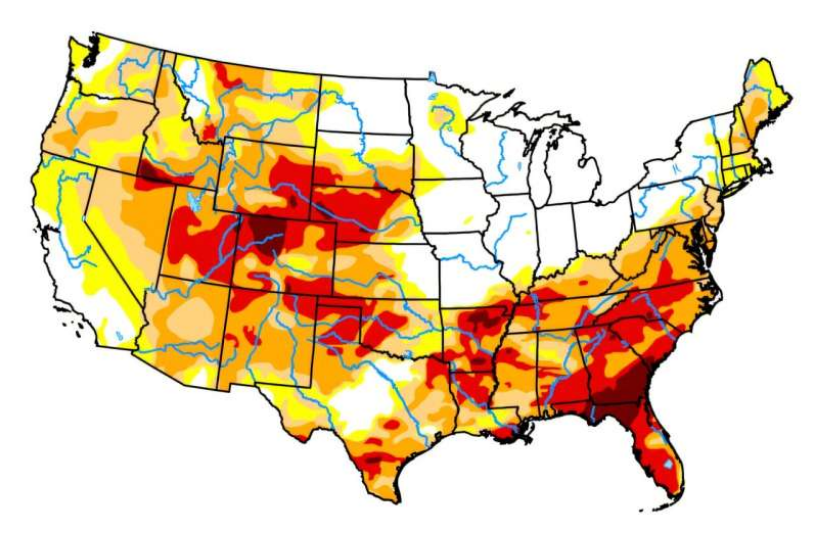
United States drought map released by U.S. Drought Monitor on May 7, 2026. The Drought Monitor focuses on broad-scale conditions. Local conditions may vary. Credit: National Drought Mitigation Center.
More than 60% of the United States is experiencing drought conditions, with more than 20% in an extreme drought. Andrew Ellis, a climatologist at Virginia Tech said the current conditions are among the worst in decades because the combination of intensity and aerial coverage is rare. He explained why, who is most impacted, and when we can expect relief.
According to Ellis, the La Niña condition, or cooling of the western equatorial Pacific Ocean, this past fall and winter brought the dryness across the southern tier of the United States. While dryness from the West spreads through the southern Great Plains and into the Southeast in La Niña years, Ellis noted this specific event was atypical because the Pacific Northwest remained so dry.
"With La Niña in place, the fall and winter season storm track typically moves farther north along the U.S.-Canadian border, leaving the southern U.S. without the storm dynamics that generate precipitation," Ellis said. "Pacific storm systems are less frequent in the Southwest, and the flow of moisture from the Gulf of Mexico into the eastern U.S. is less frequent."
Ellis added that climate warming is exacerbating these conditions.
"While precipitation remains the primary driver of drought, increased air temperatures lead to greater water loss from the soil through evapotranspiration, intensifying the effects of dry spells."
The two greatest areas of concern in terms of drought intensity and ramifications for water resources are Colorado and the Southeast, particularly Georgia and Florida.
"In these areas, extreme and exceptional drought conditions are rather widespread," Ellis said. "More broadly, the southeastern quadrant of the U.S. from the deep South to the mid-Atlantic has widespread and deep drought conditions, and the central Rocky Mountains and high Great Plains regions are enduring widespread, deep drought."
According to Ellis, states from New Jersey to Arkansas are particularly susceptible to fall and winter dryness during La Niña years. "These regions rely on moisture from the Gulf of Mexico and the Southeast coastline; however, that door has been mostly shut for the past six to eight months."
Conversely, Ellis said, the Ohio Valley tends to be wetter during La Niña years and has remained largely drought-free so far this year.
Significant drought relief is difficult to achieve in the warmer months. "The most significant relief often comes from late summer or early fall tropical systems, though these carry risks of damaging winds and too much rainfall in a short period of time," Ellis said.
Relief in the Rocky Mountains and high Great Plains is especially difficult in summer, as those regions rely heavily on winter snowpack and large-scale winter storm systems. While the Southeast and mid-Atlantic can see wet summer periods driven by Gulf and Atlantic moisture, these events are rarely persistent enough to eliminate a deep drought.
"Looking beyond summer, it appears we may be in store for a historic El Niño event next fall and winter," Ellis said. "This could theoretically produce the opposite conditions to this past year's La Niña."
Provided by Virginia Tech
Source : phys.org

The best of Tired Earth delivered to your inbox
Sign up for more inspiring photos, stories, and special offers from Tired Earth
By signing up for this email, you are agreeing to news, offers, and information from Tired Earth. Click here to visit our Privacy Policy.

Comment