



21 Jan 2026

Tired Earth
By The Editorial Board
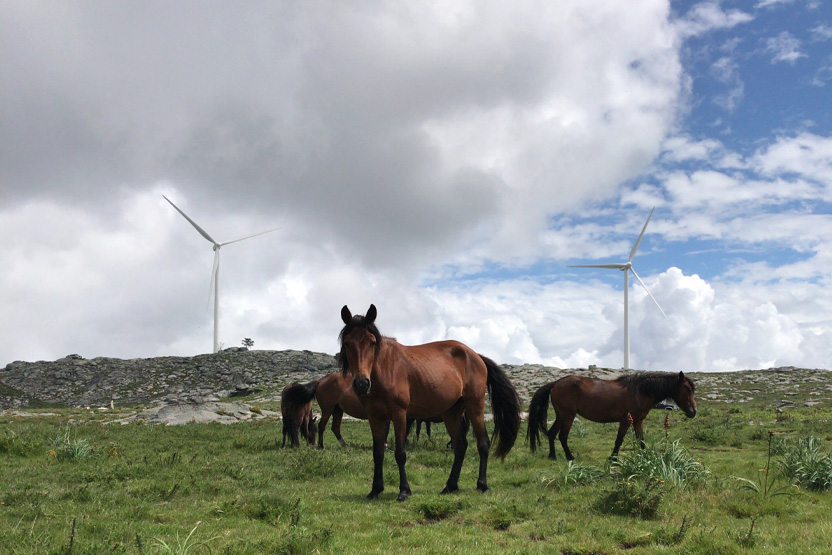
Feral horses studied in this research. Credit: Tamao Maeda
by The Graduate University for Advanced Studies
edited by Gaby Clark, reviewed by Robert Egan
For social animals, encounters between rival groups can often lead to conflict. While some species avoid this by maintaining fixed territories, others, like the feral horses, live in a "multilevel society" where multiple family groups (units) aggregate to form higher level groups.
Aggregating is considered to offer protection against predators and bachelor males, but it also brings rival males into close contact. The horses face a dilemma: they want to group together for safety but need to maintain distance to avoid fighting. How they navigate this constant balance in a fluid environment had remained unclear.
A research team led by Kyoto University used drones to observe 25 units of horses in Serra D'Arga, Portugal. A total of 166 observations were conducted and units never mixed, with one exception. To determine if this spacing was simply due to chance, the team performed a randomization analysis.
They compared the observed data against randomized data. The results showed that real horses statistically avoided being near other units and, even when close, actively prevented mixing. This confirms that their spatial structure is a deliberate strategy to maintain social order.
The study, published in Proceedings of the Royal Society B: Biological Sciences, further revealed that horses dynamically change their unit's shape based on the distance to neighbors. When the nearest unit distance was shorter, the unit became more rounded, presumably to avoid the areas of the other units. When another unit further approached, the shape of the unit became thinner such that the boundary of the units would not cross.

Kobe-Uzumasa pair (right) and a pair of other groups (left). Circles indicate horses aged ≥1 year, and different colors indicate membership in different groups (units). Typically, groups do not mix and remain spatially segregated. In contrast, the Kobe and Uzumasa groups can intermix. Credit: Shinya Yamamoto, (Sakiho Ochi)
While strict avoidance was observed for most of the units, the team discovered a striking exception: a unit led by a male named "Kobe" and another by a male named "Uzumasa." Unlike any other pair, these two units frequently approached each other and mixed their members (21 times out of 59 observations). This behavior was consistent, having also been observed in 2016. Such high social tolerance between specific units has never been reported in this habitat or others. It suggests a unique relationship exists exclusively between these two groups.
This study highlights how animals in shared spaces maintain order through dynamic spatial adjustment rather than fixed boundaries. By constantly adjusting their distance and shape, horses balance the benefits and costs of group living.
Journal information: Proceedings of the Royal Society B
Provided by The Graduate University for Advanced Studies
Source : phys.org

The best of Tired Earth delivered to your inbox
Sign up for more inspiring photos, stories, and special offers from Tired Earth
By signing up for this email, you are agreeing to news, offers, and information from Tired Earth. Click here to visit our Privacy Policy.



Comment