A massive slab of ice has broken away from one of Greenland's largest glaciers, creating a rare Arctic ice island roughly the size of Manhattan and giving researchers a new opportunity to study changes taking place in the polar environment.
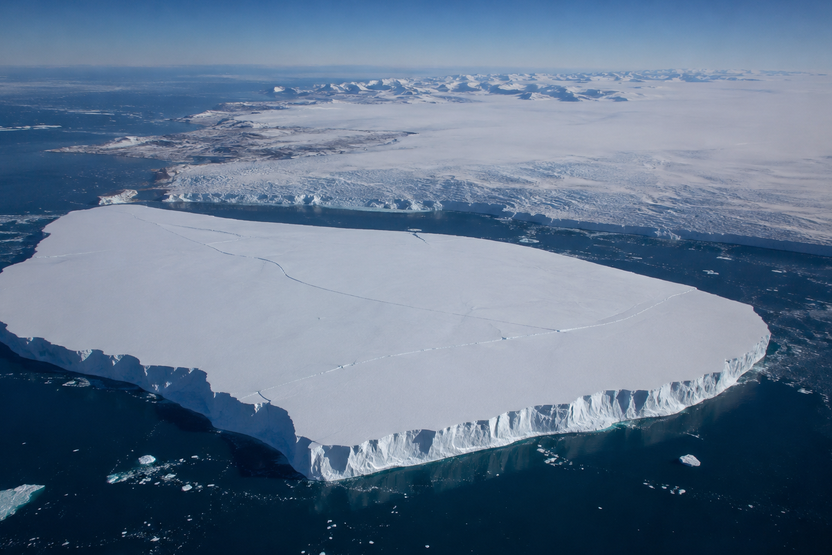
Photo generated with AI
A massive slab of ice has broken away from one of Greenland's largest glaciers, creating a rare Arctic ice island roughly the size of Manhattan and giving researchers a new opportunity to study changes taking place in the polar environment. Scientists say the event marks the largest loss of floating ice from Petermann Glacier since 2012, according to phys.org.
The newly formed ice island separated from Petermann Glacier in northwestern Greenland on Aug. 4 after years of growing fractures weakened the glacier's floating ice tongue. Researchers involved in an international monitoring effort estimated the detached ice mass covers about 76 square kilometers (29.5 square miles) and is as much as 150 meters, or nearly 500 feet, thick, uottawa.ca said.
The break was identified through satellite observations by a team that includes scientists from the University of Ottawa, the University of Stirling, Environment and Climate Change Canada, Lancaster University and the University of Leeds. Researchers have tracked changes in the glacier since 2019, documenting expanding cracks and signs of instability that suggested a major calving event was becoming increasingly likely, stir.ac.uk reported.
Scientists said the event represents the largest Arctic glacier calving episode since 2020 and provides a rare chance to examine how large Arctic ice islands form, drift and eventually break apart. Unlike Antarctica, where giant tabular icebergs are relatively common, similarly sized ice islands are uncommon in the Arctic.
Researchers believe continued monitoring of the ice island could improve understanding of glacier retreat, ocean conditions and navigational hazards in northern waters. Because these floating masses can persist for years, they offer scientists a long-term natural laboratory for studying interactions between ice, oceans and climate systems.
The newly detached ice island may not be the last major change at Petermann Glacier. Researchers say additional rifts remain across the glacier's floating tongue, and two more large sections of ice are expected to separate in the future. If those events occur, scientists estimate the glacier could lose roughly 22% of its remaining floating ice shelf.
Experts also note that large ice islands can present challenges beyond scientific research. As they drift through Arctic waters, they may threaten vessels, offshore operations and marine ecosystems before eventually fracturing into smaller pieces that can be more difficult to track. Researchers plan to continue following the new ice island's movement using satellite imagery and other remote sensing tools.








Comment