


28 Dec 2025
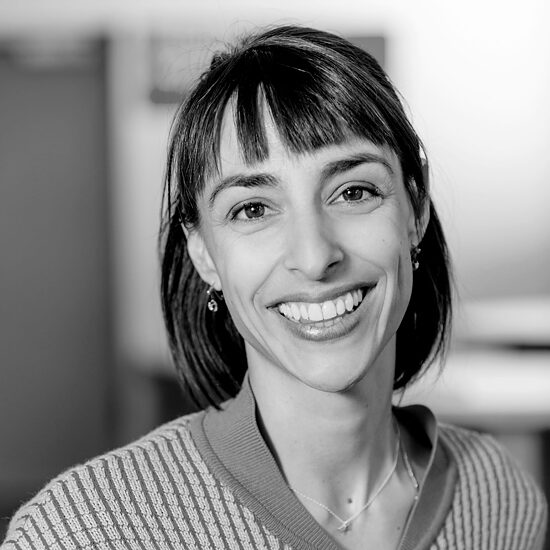
Isabel Hölzl
German
The climate crisis is not just an environmental concern—it’s a cultural one.
Isabel Hölzl studied classical and contemporary dance at the University of Music and Performing Arts in Frankfurt am Main and at the Pontificia Universidade de São Paulo, Brazil. She worked as a cultural manager for international productions for various institutions in São Paulo, before she began working at the cultural department of the Goethe-Institut São Paulo in 2011, where she conducted dance and theatre productions and developed programs on sustainability and on the "Global South". Afterwards she worked as a coordinator for dance in the department of theatre and dance at the headquarters of the Goethe-Institut in Munich. In August 2017 she became the head of the Goethe-Institut Finland but left the position in mid-2022 and is currently serving as the Director of the Goethe-Institut Rio de Janeiro.
Tell us about your educational and professional background that led you to becoming the Director of the Goethe-Institut Rio de Janeiro.
I studied classical and contemporary dance at the University of Music and Performing Arts in Frankfurt am Main and at the Pontifícia Universidade Católica de São Paulo. In São Paulo, I developed artistic projects and collaborated with dance collectives. Over time, my path led me into cultural management. I worked with various institutions before joining the cultural program of the Goethe-Institut São Paulo, focusing on dance and theatre projects and developing programs on sustainability and Global South perspectives. Later, as coordinator for dance at the Goethe-Institut headquarters in Munich, I worked on international networks and co-productions. In 2017, I became Director of the Goethe-Institut Finland. There, I explored diversity in children’s literature, organized residencies for Indigenous artists around the Arctic Circle, and joined a Nordic feminist platform for norm criticism. I also coordinated an EU Interreg project on culture and the creative economy in the Baltic region.
Since July 2022, I have been directing the Goethe-Institut in Rio de Janeiro. Here, my focus is on Franco-German cooperation, skilled migration with German language proficiency, and projects at the intersection of Indigenous self-determination and environmental conservation.
Tell us about your goals and vision at Goethe-Institut Rio de Janeiro regarding your work on international co-productions, sustainability, and "Global South" perspectives in cultural management.
The Goethe-Institut is based on the exchange of ideas, people and the diversity of perspectives with Germany and the worldwide localities we are based on. Our direct interaction is with the local partners, festivals and people and also their main challenges and aspirations. Therefore, our projects should contribute to an intercultural dialogue, where local and global perspectives meet using our global network of institutes and local connections. Co-productions are already very elaborated ways of collaborating, very often initiated by invitations we make to artists, cientists and especialists from Germany to come to Rio for festivals or other local activities. Also, projects that work on certain topics, like actually Cidade Floresta, Cosmoperceptions of the forest, a gathering on Rematriar bring together people from different parts of the world to exchange, work together in residency formats and even produce e.g. an art exhibition that might touch a wider audience on the issue of climate crisis. The climate crisis is not just an environmental concern—it’s a cultural one. By integrating the local Brazilian, Rio de Janeiro, Global South perspectives, we challenge Eurocentric models, create space for voices that have historically been underrepresented and show other possibilities to tackle the challenges.
Tell us about your work on articulating accessibility and social participation as core methods in cultural content.
Accessibility and participation are essential for cultural democracy, but as an institution we have to be aware of the strong position we have in a relation with artists, communities and self-run organizations. Mostly I try to think of the way we want and can work together: what are the expectations from all involved parts? Who takes decision on what and how can we as institution support the decision and eventually adapt our own expectations and also the products we might need at the end of a project. Can we formulate working contracts in a way that it is of mutual interest and benefit to collaborate? Can participants of the project that take care of children or elder people still travel and do art residencies? Can we adapt our budget accordingly? Can we decide together on communication channels and its limits? Not all our programs remove all barriers, but we are trying to be more aware of the inclusivity we can offer. This includes multilingual formats, digital access, and partnerships with community organizations to ensure that local voices shape the content. Co-creation processes such as residencies in forest territories (Amazonas, Marajó, Atlantic Forest, Sápmi in Finland, Rio Negro/Munich), where artists, scientists, and indigenous communities jointly produce works.
We are trying to embed participation, allow for collective processes and share decisionmaking as the very methods of artistic and institutional work.
On the first ever Culture Day at COP30 which events did you launch at COP30?
We decided almost 3 years ago, that we wanted to make a project based on 5 indigenous and traditional forest territories and end it in Belém paralell to the COP30. Despite all challenges and due to an effort of a lot of partners and people “Cosmoperceptions of the forest” found its way to Belém, launched a series of landmark events and contributed to place culture on the climate agenda.
The exhibition became a space of exchange and visibility of the indigenous cosmoperceptions for a wide public. Being at Belém at the occasion of the COP30, gave us the opportunity to take part in a constellation of events, that marked a historic moment, as culture was formally recognized as part of the climate agenda, bridging art, science, and indigenous knowledge to inspire new pathways for climate action.
Do you collaborate with Climate Heritage Network (CHN)?
No – not directly, or at least not to our knowledge. However, as a member of EUNIC (European Union National Institutes for Culture), the Goethe-Institut has endorsed the “Group of Friends of Culture-Based Climate Action” launched at COP 28. This initiative is closely linked to the Climate Heritage Network and its Global Call to Action, so while we are not formal CHN members, we are connected through our EUNIC engagement and support of this broader cultural climate alliance.
How did your book INSPIRADOR influence COP30 becoming the first conference where cultural heritage was included in the action agenda?
INSPIRADOR is not a book but rather a hands-on guide first developed in 2013 by 3 cultural managers Laura Sobral, Lorena Vicini, Jonaya de Castro and me as a project of the Goethe-Institut São Paulo. The guide introduces strategies and tools for sustainable cultural management, encouraging cultural managers, artists, and institutions to rethink resource use, adopt fair and collaborative practices, integrate sustainability into cultural programming and think of a legacy that their event can have for the spot and public.
Through workshops across Brazilian cities, it inspired new ideas that became examples of creative and sustainable practice. Its open CC license enabled international adaptations, with versions in Portuguese (2015), English (2017), and German (2018), each adding local case studies.
This groundwork links culture and sustainability, showing how cultural management and creative industries can foster climate-conscious behavior and resilient communities, ultimately contributing to COP30’s recognition of cultural in the official climate agenda.
What cultural programs are you planning for COP31 in Antalya, Türkiye?
At the Goethe-Institut we base our actions on the principles of sustainability. Our commitment to the topic of sustainability focuses on the United Nations goals for achieving sustainable development. With our work, we make a contribution to a sustainable and comprehensive climate foreign policy.
Every Goethe-Institut designs its program according to local needs, the continuity of certain topics and partnerships, therefore I do not know at this point what our Goethe-Institute in Turkey is planning for the next COP. But one can see that the range of cultural projects and educational programmes on sustainability is very wide. Sustainability - Goethe-Institut
Anything else you would like to add?
Culture is not a bystander in the climate crisis—it is a catalyst for change. We, cultural workers, artists, people that contribute to the development of our cultural scenes, we know the power of art and culture. By embedding cultural perspectives in global agendas, we create pathways for empathy, innovation, and resilience.
In the official negotiation results and decisions of the COP, culture hardly appears. And if it does, then only as material heritage—defensively, as something that must be preserved. Yet we know that culture is a transformative actor. Culture sharpens our senses and changes attitudes. By 2025, all scientific data is available. We know in theory what needs to be done. Nevertheless, we act only sporadically and hesitantly. The climate crisis is also a crisis of imagination. Cosmoperceptions show that a different relationship to the world is imaginable, tangible, and already lived.
In the Southern Hemisphere, we experience that a slightly adjusted “business as usual” is no longer enough. Now that the first tipping points have been crossed, our cultural work must be designed regeneratively. This includes building a Casa de Reza—a prayer house where Indigenous medicine is taught to the next generation—or supporting a ceramics studio on Marajó Island in drafting a funding application to ensure cultural preservation, youth engagement, and environmental protection in this vulnerable region.
Back from Belém and COP30, we can say that, on the political level, decisions fell far short of what is necessary. There is no plan to phase out fossil fuels, and despite demonstrations—even in the Blue Zone, the diplomatic zone of COP30—islands continue to sink, a Forest Fund remains drastically underfunded, and real change has been deliberately blocked. Our expectation to see “culture” included in the final declaration was not fulfilled either. However, we now know where and who the levers are, and we have experienced the impact of a project built on deep exchange and trust. We share our work and responsibility as cultural actors with many wonderful institutions, NGOs, and initiatives worldwide—and we will continue to build on that.
How can people reach you and get involved?
You can connect with us through the Goethe-Institut Rio de Janeiro website Goethe-Institut Brasilien | Rio de Janeiro and @goetheinstitut_rio social media channels.

The best of Tired Earth delivered to your inbox
Sign up for more inspiring photos, stories, and special offers from Tired Earth
By signing up for this email, you are agreeing to news, offers, and information from Tired Earth. Click here to visit our Privacy Policy.
Comment
Reply