



19 Apr 2026
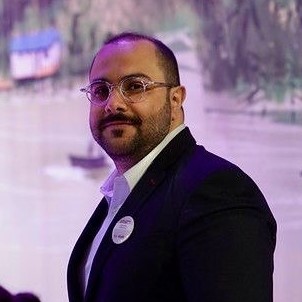
Eduardo Carvalho
Brazilian
In Brazil, the Ministries of Culture and the Environment have signed agreements to train cultural and environmental agents on the importance of these agendas. The recognition of culture as a platform for action — one that delivers real impact — is now irreversible and continues to gain new supporters.
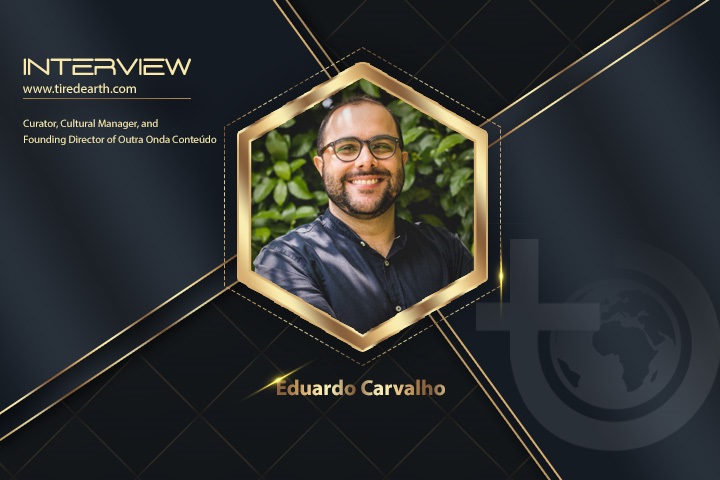
Eduardo Carvalho is an independent award-winning curator who is known for his innovative approach to exhibitions and digital experiences. With a background in journalism, science communication and curatorial practices, he has developed a reputation for exploring contemporary themes and integrating technology into art experience to articulate the impact of global warming on our earth through immersive and interactive exhibitions.
Before transitioning to the cultural sector, Carvalho was a reporter and editor for Globo TV, covering science and environmental topics. During this period, he traveled to many places, among them to Antarctica to document Brazilian scientific research – and it was a transformative experience. He has a long-standing commitment to climate action, covering UN climate negotiations starting at COP16 (Cancun, 2010), Rio+20 (2012), and COP20 (Lima, 2014).
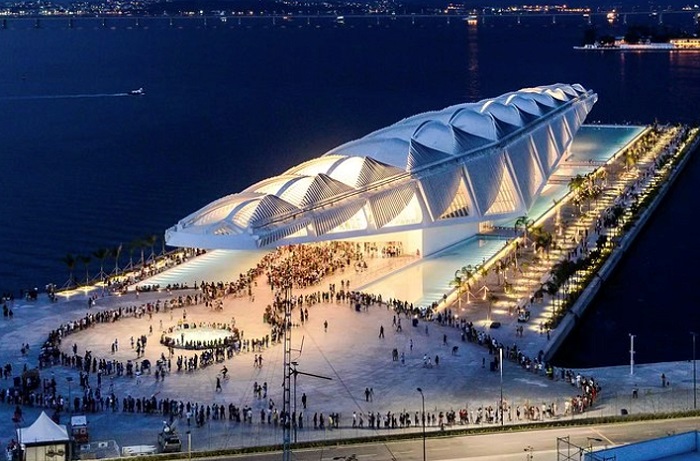
For six years, he was a member of the curatorial team at the Museum of Tomorrow in Rio de Janeiro, where he was responsible for creating projects and exhibitions regarding innovation, food and the future, the pandemic, and the Amazon that reached more than one million visitors. Since 2021, he has been developing educational experiences, exhibitions, and pavilions for UN Climate Change Conferences, starting with COP26, in Glasgow.
Carvalho is known for integrating new technologies into his curatorial projects that often challenge traditional formats. He often collaborates with artists, technologists, and institutions to foster interdisciplinary projects that push the boundaries of conventional art practices. Currently, his company, Outra Onda Conteúdo, is developing two new museums in Brazil. Carvalho is also one of the creators of a book collection that focuses on teaching elementary school children in Brazil about solutions to climate change – a work that mirrors the 2026 Earth Month theme “Our Power and Our Planet.”
In this interview, we will learn more about him.
By Selva Ozelli Esq, CPA, Author of Sustainably Investing in Digital Assets Globally
1. Tell us about your personal and educational journey that led you to your career as a curator and the founder and director of Outra Onda Conteúdo – Brazil.
Before becoming a creator of exhibitions, museums and experiences, I worked as a reporter. I am a journalist. That work allowed me to meet many people, explore a wide range of subjects, and develop a broad understanding of issues related to climate change, public health, the evolution of science and scientific methods.
My education and professional experience naturally positioned me for a curatorial role at the Museum of Tomorrow, in Rio de Janeiro, where I was responsible for translating complex scientific, social and environmental themes into exhibitions — including the Amazon, the ocean and its mysteries, the Covid-19 pandemic, and other global challenges. Our mission was to create accessible and emotionally resonant experiences through design, art, technology and gamification, developing immersive and interactive projects aimed at deepening public engagement.
During this job, I held a Master’s degree in Creative Economy Management and then I started to work as a freelance until I open my company, Outra Onda Conteúdo, in 2023, that is focused on conception of museums, narratives and audiovisual pieces.
Currently I am involved in the conception of two new museums. I was also part of the curatorial team of the Rio Olympic Museum, inaugurated last year, helping shape its narrative and visitor experience.
2. Tell us about your curatorial career at Museum of Tomorrow.
I actually began working at the Museum of Tomorrow a few months before it opened, joining the curatorial team at a moment when everything was still being built — literally and conceptually. It was a profound career shift. Until then, I had worked as a journalist, and suddenly I found myself inside the cultural sector, a world I had never been part of.
Those first years, up until 2021, were an intense learning curve. I had the chance to understand what it means to manage a museum of that scale — a museum that became the most visited in South America and a reference for science museums around the world. We received awards for our work in scientific communication, and, more importantly, we opened the doors to people who had never set foot in a museum before, much less a science museum.
For me, it was the moment when journalism and exhibition-making converged. What I once did by writing articles that translated scientific studies, I now did by transforming those ideas into experiences capable of impacting tens of thousands of people. Instead of a text, we created environments that helped people reflect on climate change, the future of humanity, or our shared past.
At the Museum of Tomorrow, I helped create exhibitions that reached more than one million visitors and explored themes like the future of food, the importance of innovation in Brazil, and the global relevance of the Amazon. I also developed virtual reality experiences in collaboration with the Yanomami and contributed to one of the first public exhibitions in the world about the pandemic.
This work opened doors to cultural diplomacy, climate diplomacy, and the broader culture-and-climate agenda. And it was truly a turning point for me. It taught me how to build an exhibition, how to value the audience, how to use emotion responsibly, and how to create synergy between art, design, technology and science. It also taught me the importance of institutional respect — whether working with scientific organizations or with municipal, state and federal governments.
Above all, it connected me to professionals across Brazil and around the world. It was a transformative chapter, and I carry it with me in everything I do today.
3. Tell us about your initiatives to integrate culture into climate policies in Brazil starting with United Nations Climate Change Conference COP26.
In 2021, I was invited to join the team that coordinated the Brazilian civil society pavilion at COP26 in Glasgow, Scottland. The Brazil Climate Action Hub functioned as a paradiplomatic space where subnational governments, non-governmental organisations, Indigenous peoples, and traditional communities came together to demonstrate that Brazilian climate policy was still alive, despite the federal government at the time. And, the culture and climate focus/agenda began to take shape within my professional work at this conference as I advocated for culture as a central driver of climate action rather than a peripheral issue.
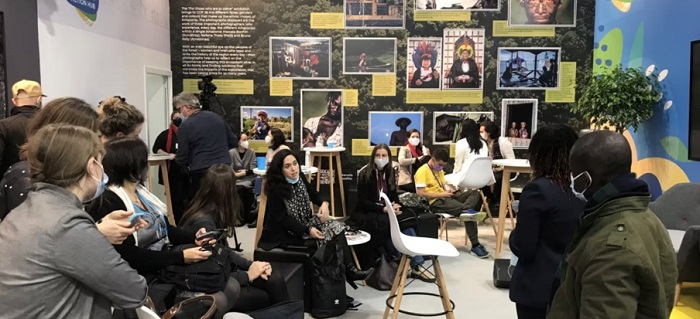
At COP26, I curated cultural programming and international exhibitions for the space, turning it into a hub that not only welcomed people but also told a powerful story through culture and indigenous perspectives from the Global South to engage audiences on climate issues, specifically addressing the human impact on the Amazon.
There were 13 photos showing the Black, Indigenous, Urban and Riverside population of Amazonia. The photographers, Bruno Kelly, Marcela Bonfim and Nailana Thielly, help us reflect on the importance of keeping this ecosystem alive and finding solutions to minimise the impact of exploitation.
4. Tell us about your initiatives to integrate culture into climate policies in Brazil at COP27.
At COP27, we had the chance to design and lead the Brazil Climate Action Hub, and it quickly became one of the standout spaces of the entire conference in Egypt. Our goal was to show that climate action from the Global South is not only possible, but innovative, diverse and culturally grounded. So we built a pavilion that combined exhibitions, interactivity and a strong cultural program — a space where design, narrative and public participation worked together to enrich the climate negotiations happening just outside our doors.
It was also a pivotal moment for Brazil. The country was going through a political transition, and climate was returning to the center of the national agenda. The pavilion became a place where we could tell that story in real time — demonstrating how culture and climate are deeply connected, even before that relationship had a formal name.
The result was a tremendous success. The Hub became a meeting point for negotiators, activists, scientists, artists and community leaders. And the visibility and impact of that work opened doors for new collaborations in the years that followed. For me, it reinforced how powerful cultural diplomacy can be when it’s aligned with climate action and when it gives space for voices from the Global South to lead the conversation.
5. Tell us about your initiatives to integrate culture into climate policies in Brazil at COP28.
At COP28, I led the curatorial work for the Brazil Pavilion, where we brought cultural programming into the heart of the climate discussions. I had the opportunity to moderate a conversation with the Minister of Culture at the time, Margareth Menezes, and to participate in the first meeting of the Group of Friends of Ministers of Culture for Climate. That moment was a turning point — it became clear that Brazil needed to speak more openly and strategically about the culture and climate agenda.
From that experience, a broader project began to take shape. The following year, in collaboration with Organização Cidade e Cultura, we launched “Cultura e Clima,” the first research initiative in Brazil dedicated to this topic. We conducted a global review of cultural climate initiatives to help inspire both the Ministry of Culture and the Ministry of the Environment in the lead up to COP30 in Brazil. The goal was to show, with evidence, that culture can be a powerful platform for engaging the public in climate solutions.
COP28 was where this agenda gained clarity and momentum — and where we began building the foundations for a national conversation that is now becoming central to Brazil’s climate leadership.
6. Tell us about your initiatives to integrate culture into climate policies in Brazil at COP29.
My company, Outra Onda Conteúdo, led the conception and creative direction of the Brazil Pavilion at the summit, shaping the space that hosted the country’s climate commitments and diplomatic engagements. We also developed an installation for the Regional Climate Foundations (RCF) Pavilion, bringing narrative design and public facing storytelling into the center of the climate dialogue.
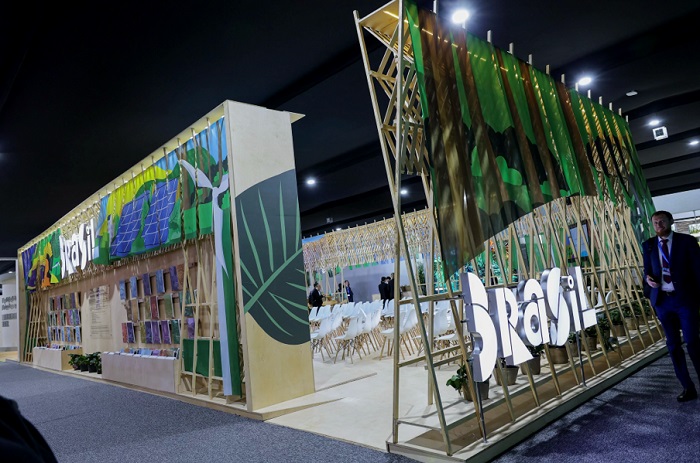
7. Tell us about your initiatives to integrate culture into climate policies in Brazil at COP30.
One initiative that I would like to highlight is the "Dear Future Me" experience, that was born during the COP29 and finished at COP30. Developed by Outra Onda Conteúdo at the invitation of the organisations that comprise the Regional Climate Foundations (RCFs) pavilion, the installation was part of the Building Hope exhibition.
The "Dear Future Me" experience delivered a message from the future, suggesting that humanity had successfully adapted the planet to the new climate regime through a collective effort. Faced with this new reality, the "future self" asked the "present self": What was done to make this optimistic future possible?
Responding to this invitation, nearly 200 people wrote messages on postcards. Notes were left from various countries and continents, in different languages. One year after COP29, in partnership with the University of Exeter in the United Kingdom, all the messages were analyzed to identify the main sentiments and actions shared by the participants.
The research associated with the experience used artificial intelligence tools to examine thousands of letters written in multiple languages. The technology enabled the translation and interpretation of complex phrases, revealing participants' emotional and behavioural patterns. This innovative approach made it possible to understand how people are acting in the present to confront the climate crisis—from individual actions to collective initiatives—and how they project their hopes and commitments for the future.
The collected data indicated that the experience generated feelings of empowerment, intergenerational connection, and a renewed commitment to concrete actions. By combining art, science, and emotion, "Dear Future Me" demonstrated that it is possible to create transformative spaces that not only raise awareness but also catalyze real change.
The initiative reinforces the role of positive narratives and collective imagination as essential tools in the fight against the climate crisis, emphasizing the importance of cultivating hope as a mobilizing force.
8. Tell us more about the Culture and Climate research and about its impact.
The research line emerged in 2024 with the development of an evidence synthesis that brought together data, analyses, and expert contributions on the intersections between culture and climate change. As a direct outcome, we created the Espalha platform, which compiles more than 130 cultural initiatives with climate-related action across the country.
In 2025, through the quantitative phase of the research, we deepened our understanding of how different segments of the Brazilian population perceive, experience, and mobilise around this connection.
Building on these findings, among the Brazilians surveyed, 83.5% believe they can become better informed and gain a deeper understanding of climate change through cultural activities and cultural goods — in other words, culture is seen as a source of information.
For 73.3% of respondents, cultural activities and goods can help them face the crisis in practical terms — meaning culture is perceived as a platform for action. And 62.6% stated that a book, song, film, museum, artwork, or other cultural good — as well as a school or cultural organisation — has already inspired them to change habits related to environmental or social issues.
More details about the research can be check it on culturaeclima.com.br/en
9. Tell us about The Global Ethical Stocktake (GES) at COP30 which places culture at the center of climate action, treating it as an "ethical compass".
The Global Ethical Stocktake played a crucial role in exposing the current lack of climate ethics—a gap that continues to delay actions capable of preventing millions of people worldwide from facing catastrophic conditions. Why not act now? And who must take responsibility? If we are living through an empathy crisis, how can we repair it? These are some of the questions the Global Ethical Stocktake has posed to negotiators and government leaders.
Outra Onda Conteúdo designed the Global Ethical Stocktake methodology and oversaw its implementation across all continents. Led by the COP30 Presidency and the United Nations, the initiative brought participants together. They engaged in dialogue about rebuilding relationships and communities and explored the deeper meaning of climate ethics.
My partner, Leo Menezes, and I contributed to developing the concept for the gatherings, emphasising culture as a central element to evoke genuine emotional expression from participants. We also created a collective artwork for each continent, curated artistic performances, and selected guests based on regional and thematic diversity.
Additionally, we are finalising the official Global Ethical Stocktake film, which will be released soon, and we have designed a 200-square-meter exhibition pavilion in the Blue Zone of COP30. The space showcased a series of artworks and videos, including the collective piece created throughout the dialogues and produced by the artist Alexia Ferreira.
10. In your opinion, did COP30 leave a legacy for the culture discussion involving Climate change?
Yes! Just as Rio92 left a powerful legacy for civil society — strengthening environmental groups across the world — COP30 in Brazil became a stage for vibrant cultural diversity. The discussions brought together traditional communities and diverse forms of knowledge, resulting in debates that have already extended far beyond Belém. There is now an active conversation about creating a cultural stocktake, the third phase of the Culture and Climate research is underway, and governments are coordinating efforts to protect both tangible and intangible heritage.
In Brazil, the Ministries of Culture and the Environment have signed agreements to train cultural and environmental agents on the importance of these agendas. The recognition of culture as a platform for action — one that delivers real impact — is now irreversible and continues to gain new supporters. This is one of the true legacies of Brazil’s COP, in a country where creativity and culture hold immense significance.
11. Do you and your company Outra Onda Contuendo collaborate with museums worldwide?
Yes — we’re constantly collaborating with people from different parts of the world, always thinking about narratives that can showcase the strength and creative potential of countries like Brazil beyond our borders. Our goal isn’t only to bring Brazilian cultural projects abroad, but also to co create stories that can travel, resonate in different contexts, and highlight the cultural diversity that defines our planet.
We believe deeply in storytelling as a tool to show how humans can be resilient, collaborative, and capable of finding solutions to the crises we face. When culture is used intentionally, it helps people imagine a future where we live in balance with biodiversity, with the ocean, and with a healthy environment.
That’s why we’re always looking to collaborate with diverse artists and partners — and why we actively seek funding and sponsorships to bring these projects to life. For us, cultural work is not just about representation; it’s about mobilizing people and expanding what’s possible when creativity meets climate action.
12. How can people, environmental artists reach you?
Via my instagram @edujcarvalho and the instagram of Outra Onda Conteudo @outraondaconteudo.
My email is eduardo@outraondaconteudo.com.br and our website is outraondaconteudo.com.br/en

The best of Tired Earth delivered to your inbox
Sign up for more inspiring photos, stories, and special offers from Tired Earth
By signing up for this email, you are agreeing to news, offers, and information from Tired Earth. Click here to visit our Privacy Policy.
Comment
Reply