We cannot expect communities to implement sustainable practices if they are denied the literacy to understand why they matter.

On June 5th, World Environment Day places the global spotlight precisely where it belongs: Climate Action. Under the global campaign message “Inspired by Nature. For Climate. For Our Future, “this day acts as a line in the sand. According to the World Meteorological Organization (WMO) and international climate bodies, global greenhouse gas concentrations have hit unprecedented peaks. The Earth is no longer merely sending subtle warning signals; it is demanding a structural overhaul of how we treat our biosphere. World Meteorological Organization (WMO) confirms that the global average temperature has crossed the symbolic 1.5degree Celsius threshold set by the Paris Agreement .The crisis is here.
To survive this era, we must propel climate action at every single level, from localized village farms to international policy boards. We do not need to wait for a hypothetical, hyper-expensive mechanical savior. No human technology can compete with the integrated power of healthy forests, living soils, sovereign oceans, and an educated global populace. It is time to look at the hard data.
1. No Technology Beats the Forest: The Rainforest Defense.
Afforestation and Reforestation Are Non-Negotiable, But Must Be Done Right.
For years, millions of dollars have been channeled into mechanical Carbon Capture and Storage (CCS) plants. Yet, the Intergovernmental Panel on Climate Change (IPCC) consistently underscores that nature-based solutions are our most efficient weapons. Globally, land-based ecosystems predominantly forests absorb roughly 29% of all human-generated carbon emissions, serving as a massive planetary sponge. The potential is huge but limited. Reforesting 195 million hectares,71% less than earlier estimates, could capture 2 GtCO₂ per year. Since 2000, 59 million hectares of forests have regenerated naturally, absorbing 5.9 GtCO₂.
This reality is most acute within our tropical rainforests. The IPCC’s Sixth Assessment Report highlights that conserving, restoring, and managing these dense, humid canopy systems offers some of the highest mitigation potentials globally. Forests are still a net sink. Between 2021–2025, the world’s forests sequestered 3.6 billion tonnes of CO₂ annually, though deforestation released 2.8 Gt CO₂/yr, leaving a net removal of 0.8 Gt CO₂/yr.
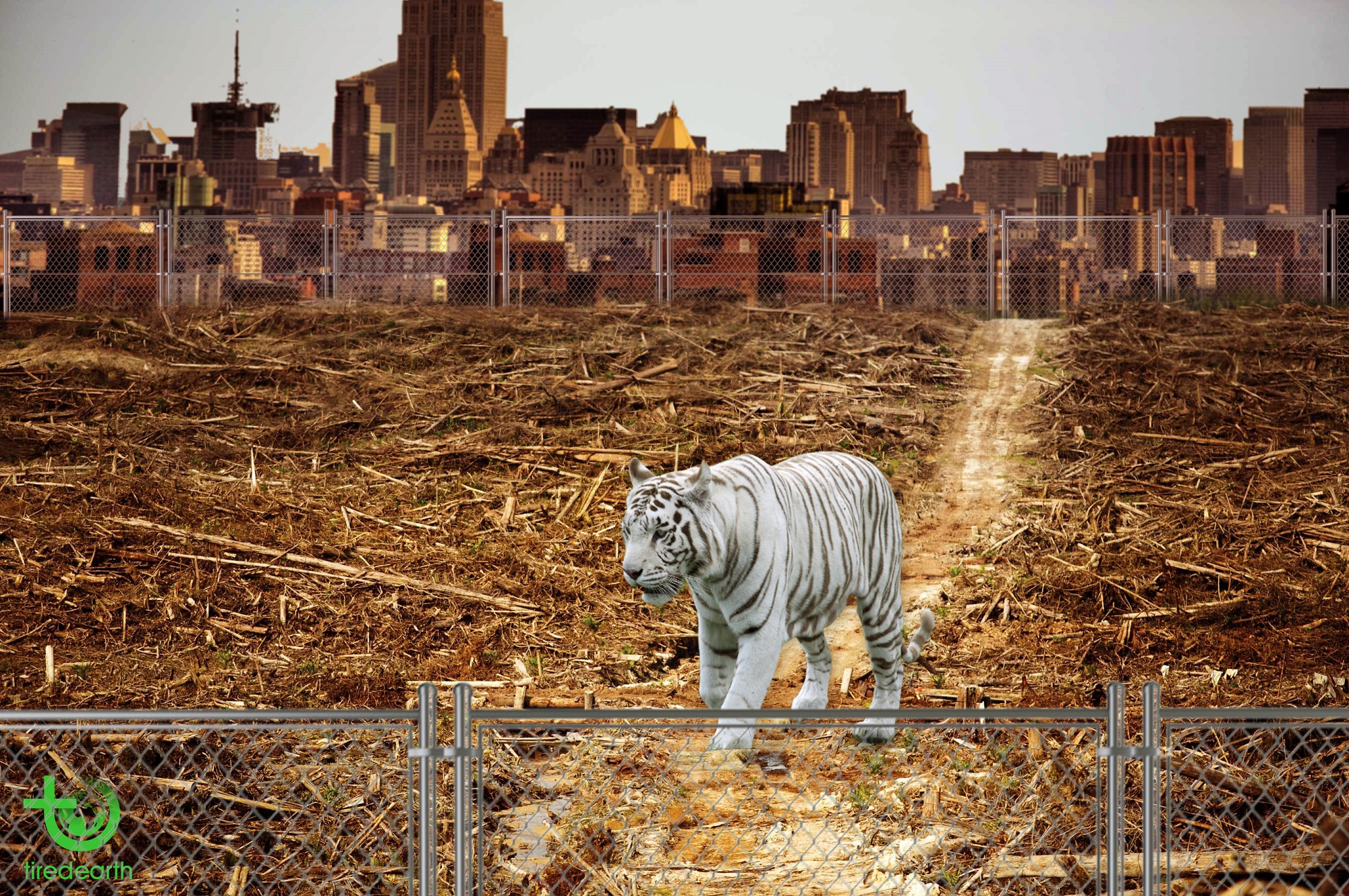
Healthy Rainforest Ecosystem Captures 29% of Global Carbon + Regulates global Rainfall while deforestation continues, to accelerate degraded Savannah State and High Albedo, Carbon Release and Local Drought Risk.
Every country must establish aggressive, mandatory afforestation and tree-planting frameworks. When we protect a rainforest, we aren’t just saving trees; we are preserving local rainfall belts that feed entire agricultural communities.
Every country must mandate tree planting and afforestation, but prioritize natural forest regrowth and biodiversity over monoculture plantations. Natural regrowth delivers more carbon, biodiversity, and resilience. Deforestation still runs at 10.9 million hectares per year — we must halt it. As FAO notes: net forest loss fell from 10.7 Mha/yr in the 1990s to 4.12 Mha/yr between 2015–2025. Progress is possible.
2. Healthy Soils and Mandatory Sustainable Agriculture
We walk on one of the largest carbon storehouses on Earth. The Food and Agriculture Organization (FAO) reports that soil holds more carbon than the atmosphere and all vegetation combined. However, centuries of aggressive farming, heavy chemical applications, and the destructive practice of “slash-and-burn” have degraded vast tracts of arable land, turning living dirt into dead dust and releasing billions of tons of carbon into the air.
Regenerative Agriculture Increases Soil Organic Matter (SOM) and High Carbon Sequestration capacity.
Transitioning away from intensive, high-input farming toward sustainable agriculture is non-negotiable. Techniques like contour ploughing across sloped lands; drip irrigation system, green house farming, mulching, integrating multi-crop agroforestry systems, and planting nitrogen-fixing ground cover drastically improve Soil Organic Matter (SOM). The IPCC notes that agricultural land management represents one of the lowest-cost, highest-benefit methods to pull carbon straight out of the atmosphere while guaranteeing long-term food security.
3. Protecting the Ocean’s Blue Carbon
If our forests are the planet’s lungs, the ocean is its heart. The data compiled by the United Nations Environment Programme (UNEP) and the IPCC is staggering: the global ocean has absorbed over 90% of the excess heat trapped by greenhouse gases and safely sequesters roughly 25-30% of all anthropogenic carbon emissions. UNESCO calls it “one of our strongest climate allies”.
Marine and coastal ecosystems, particularly mangrove forests, sea grass beds, and tidal marshes store up to ten times more carbon per hectare than terrestrial forests. Deforesting coastal regions or treating our oceans as chemical runoff zones unravels this vital climate barrier. Protecting marine sanctuaries isn’t just an ecological luxury; it is a political and environmental necessity to keep our biosphere habitable.
4. Education: The Root of Every Climate Solution
UNESCO data shows less than half of 50 countries mention climate change in educational policies. Only 19% speak about biodiversity. Yet education works.
Globally, 70% of young people cannot explain climate disruption, and only 23% of teachers feel equipped to address climate action in their classrooms. An analysis of curricula across 85 countries found that 69% contained no references to climate change, while 66% had no references to sustainability. Alarmingly, climate change content only makes up about 21% of the maximum possible level of environment-related curriculum content.
We cannot expect communities to implement sustainable practices if they are denied the literacy to understand why they matter. Education is a core pillar of climate resilience that must be mandated from early childhood education up to municipal governance. UNESCO now urges making environmental education a core curriculum component in all countries by 2025.
A well-designed, mandatory environmental curriculum shouldn’t just focus on the doom of the crisis; it must focus on structural solutions. When communities are educated on the mechanics of agroforestry, the dangers of ecosystem fragmentation, and the economics of sustainable land management, they become active guardians of their local resources rather than passive observers of their degradation.
Education is a critical pillar and must be implemented at every level. As UNESCO’s Assistant Director-General says: “Education is one of the most powerful tools in the global efforts to address the climate crisis”. Climate literacy drives the behavioral change, innovation, and political will needed for SDG 13: Climate Action.
5. The Four Pillars of Sustainable Development
To ensure a healthy planet, our financial and legislative investments must simultaneously stabilize the four core pillars of sustainable development:
|
Pillar |
Strategic Climate Focus |
|
Environmental |
Strict protection of rainforest biodiversity, aggressive afforestation, and the absolute elimination of land-use degradation. |
|
Economic |
Shifting capital toward regenerative agriculture and agroforestry setups that reward farmers for building soil health. |
|
Social |
Empowering indigenous populations and rural stakeholders who live on the frontlines of our most valuable forest ecosystems. |
|
Political |
Enacting legally binding mandates for tree planting, watershed management, and clean energy investments at every tier of government. |
Climate action is not separate from development. As the UN reminds us: “To keep global warming below 1.5°C this century, we must halve annual greenhouse gas emissions by 2030”. That demands investment in sustainable practices that tackle economic, social, environmental, and political pillars together.
”The planetary crises of climate change and ecosystem degradation cannot be solved with short-term, cosmetic changes. Nature is not an afterthought—it is central to our collective survival.”
This World Environment Day let us abandon the empty rhetoric of greenwashing. We need funding for afforestation, soil health, and ocean protection. We need policies that mandate tree planting, sustainable agriculture, and climate education. Because the planet doesn’t negotiate. We are crossing 1.5°C.But another signal is rising: solar panels, wind farms, replanted forests, and restored mangroves. Every action is a signal.
This World Environment Day, Fund a solution. Plant a tree. Teach a child. Restore a hectare. Protect a coastline. We just need the collective will to execute them #NowForClimate.
By Tangwa Abilu Dzernjo
Climate and Environmental Activist for Collective Benefit
Founder of Green Mission and Climate Education for Collective Benefit (Facebook Platforms)
Email: abilutangwaabilu3@gmail.com
REFERENCES
Food and Agriculture Organization. (2020). State of the world’s forests 2020: Forests, biodiversity and people. United Nations. https://doi.org/10.
Intergovernmental Panel on Climate Change. (2022). Climate change 2022: Mitigation of climate change*. Contribution of Working Group III to the Sixth Assessment Report of the Intergovernmental Panel on Climate Change (P. R. Shukla, J. Skea, R. Slade, A. Al Khourdajie, R. van Diemen, D. McCollum, M. Pathak, S. Some, P. Vyas, R. Fradera, M. Belkacemi, A. Hasija, G. Lisboa, S. Luz, & J. Malley, Eds.). Cambridge University Press. https://doi.org/10.
Intergovernmental Panel on Climate Change. (2023). *Climate change 2023: Synthesis report*. Contribution of Working Groups I, II and III to the Sixth Assessment Report of the Intergovernmental Panel on Climate Change (Core Writing Team, H. Lee, & J. Romero, Eds.). IPCC. https://doi.org/10.59327/IPCC/AR6-
United Nations Environment Programme. (2023). the wealth of nature: Securing blue carbon ecosystems for climate, communities and biodiversity. UNEP. https://www.unep.org/resources/report/wealth-nature-blue-carbon
World Meteorological Organization. (2024).WMO state of the global climate 2023 (WMO-No. 1347). WMO. https://library.wmo.int/idurl/4/68840








Comment
Reply