



08 Feb 2026

Tired Earth
By The Editorial Board
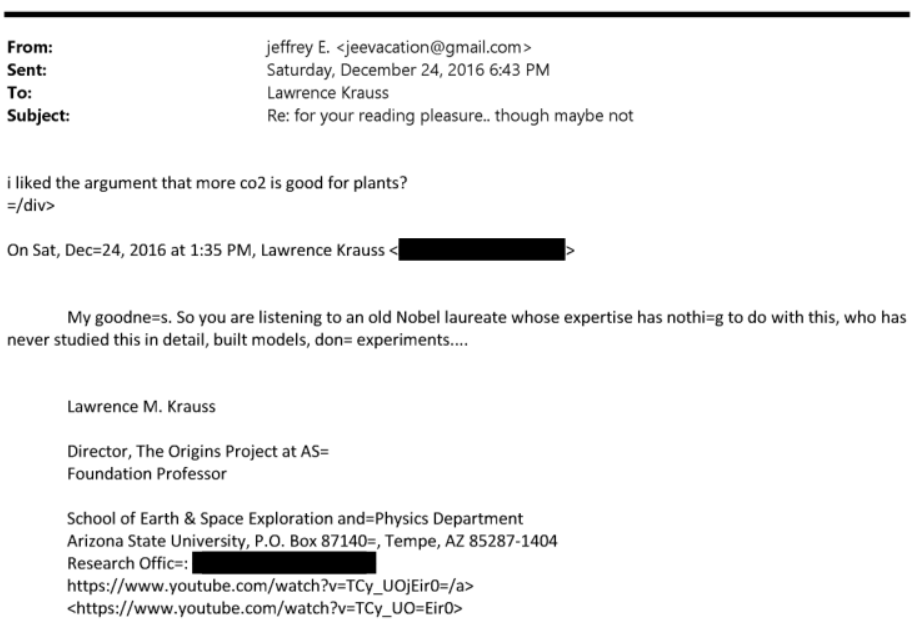
Newly released emails from Jeffrey Epstein reveal his efforts to promote climate change denial myths to physicist Lawrence Krauss as Donald Trump’s first term began. These correspondences highlight Epstein's influence on the Trump administration, shaping policies that downplayed climate science and fueled environmental harm

The recent release of over 20,000 documents from the estate of Jeffrey Epstein, including a series of emails with prominent figures such as scientist Lawrence Krauss, has reignited intense debates about the intersection of wealth, science, and climate policy. These emails, exchanged in the late 2016 to early 2017 period, offer a disturbing glimpse into Epstein’s influence on the Trump administration's approach to climate change and environmental issues. They not only reflect Epstein’s personal climate skepticism but also hint at how his ideological sway may have contributed to shaping damaging environmental policies during Donald Trump's first term.
In one notable email exchange, Epstein, the financier and convicted child sex offender, engages Krauss in a conversation filled with familiar climate denial tropes. Epstein writes: "i liked the argument that more CO2 is good for plants?" to which Krauss responds, debunking the myth with a pointed reply: "He has cherry-picked data, the typical act of those who believe the answer before they ask the question." Despite Krauss’s attempts to counter Epstein’s climate disinformation, the exchange underscores Epstein’s persistence in promoting harmful myths that undermine the scientific consensus on climate change.
The emails also reveal Epstein's direct involvement in political discussions related to climate policy. In one exchange, Epstein expresses his concerns about global warming and mentions discussing the issue with “the Trump people in Palm.” His remarks suggest that he was not only skeptical of climate science but also closely aligned with figures within the Trump administration. When discussing the administration's authorization of funding for NASA, Krauss criticizes the move as a wasteful effort to glorify Trump's image rather than support meaningful scientific advancement. Epstein, however, responds with a chillingly fatalistic outlook: "you told me you were worried about space and i told you not to worry, he will decimate climate change. and support, verifiable projects."
This exchange is particularly significant because it highlights the influence of Epstein’s climate skepticism on the highest echelons of power. Under Trump’s leadership, policies that prioritized the fossil fuel industry and rolled back environmental protections became hallmarks of his administration, a pattern that continues to have devastating effects on global ecosystems. The suggestion that space exploration—rather than addressing the climate crisis—was somehow a better focus for scientific investment exemplifies the reductionist, anti-science attitudes that have been so prevalent in the Trump administration.
The release of new documents related to the Epstein scandal reveals new details about the relationship between Jeffrey Epstein and Donald Trump
Epstein’s involvement with influential individuals, including Krauss, and his connection to Trump through shared views on climate skepticism raises critical questions about the role of powerful elites in perpetuating environmental inaction. Trump himself has openly referred to climate change as a “hoax” and echoed arguments, like those raised by Epstein, that carbon dioxide benefits agriculture. The result is a dangerous convergence of misinformation and policymaking that risks catastrophic consequences for the planet.
The harmful impact of climate change denial is not just theoretical. The Trump administration’s rollback of environmental regulations and promotion of fossil fuel interests have been directly linked to exacerbating climate-related disasters. According to a ProPublica and The Guardian analysis, Trump’s policies are projected to result in up to 1.3 million additional temperature-related deaths globally in the coming decades. This shocking statistic underscores the tangible, deadly cost of climate misinformation.
What is particularly alarming about the Epstein-Krauss correspondence is not just the persistence of climate myths but the broader political and social networks that allowed these falsehoods to flourish. Epstein, with his immense wealth and connections, and Krauss, with his academic standing, were part of a broader system that fostered climate skepticism at the highest levels of power. Their influence on Trump, a president whose policies were often dictated by the interests of the fossil fuel industry, helped create an environment where environmental harm was not only ignored but actively promoted.
The release of these emails serves as a stark reminder of the deep entanglements between money, power, and politics in shaping environmental outcomes. While Krauss’s attempts to provide data and counter Epstein’s claims may have had limited success, the broader implication is clear: the denial of climate change, fueled by influential figures like Epstein, continues to be a powerful force in shaping policy decisions that undermine efforts to mitigate the climate crisis.
In reflecting on the tragic consequences of Epstein’s actions, both personal and political, journalist Kate Aronoff made an apt comparison between climate denial and the denial of Epstein’s crimes. She pointed out that both are rooted in an overwhelming desire to protect powerful interests at the expense of vulnerable populations. Just as Epstein’s abuse of countless women went unchallenged for years, so too has the denial of climate science persisted despite overwhelming evidence to the contrary.
In conclusion, the newly released Epstein-Krauss emails shed light on the dangerous ideological currents that have influenced some of the most destructive environmental policies of our time. The climate myths espoused by Epstein, and echoed by Trump, have real-world consequences that will reverberate for generations. As we continue to grapple with the climate crisis, we must confront not just the science, but the political and financial forces that have consistently undermined our efforts to protect the planet.

The best of Tired Earth delivered to your inbox
Sign up for more inspiring photos, stories, and special offers from Tired Earth
By signing up for this email, you are agreeing to news, offers, and information from Tired Earth. Click here to visit our Privacy Policy.




Comment
Reply