As summer temperatures soar across the Gaza Strip, nearly one million displaced Palestinians are enduring unbearable conditions in makeshift tents that have become "like an oven," according to residents. The combination of extreme heat, restricted aid, and destroyed infrastructure has created a humanitarian crisis that international organizations describe as an "outrage" and an "international scandal".
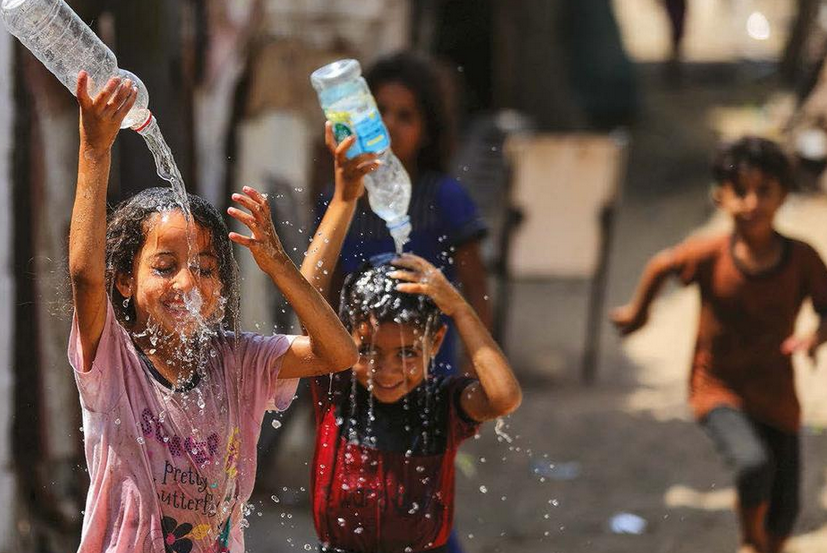
With daytime temperatures reaching 34.5°C and expected to increase, families living in fabric and plastic tents face suffocating conditions. The flimsy shelters trap heat, making them feel far hotter than the outside temperature. Nahed Hamouda, a 56-year-old father of four displaced from Jabalia, described the tents as being "like an oven" with no electricity, fans, or even drinkable water.
A displaced man who relies on oxygen cylinders told reporters he "dies thirty times a day" due to breathing difficulties exacerbated by the intense heat. Mothers describe pouring scarce water over their children's heads to cool them, while the elderly and sick are particularly vulnerable.
A Poisoned Refuge: The Mediterranean Sea
With no other escape from the sweltering tents, thousands have flocked to the Mediterranean coast seeking relief. However, the sea that once offered recreation has become heavily polluted with untreated sewage and waste.
"The seawater is not clean. There's sewage in it, filled with dirt," said Shehab al-Suwaireki, a displaced father of six. Yet he admitted families have little choice: "We go in and wash clothes and bathe, then we get out. In any case, germs are getting to our bodies".
According to Gaza municipal officials, most water pumps, sewage stations, and treatment facilities have stopped functioning or been severely damaged during the conflict. The Gaza Government Media Office warned that more than 200,000 cesspools are scattered throughout the Strip, threatening groundwater contamination and the spread of infectious diseases.
The Shelter Crisis
According to the Norwegian Refugee Council (NRC), approximately 170,000 households—nearly one million people—currently live in tents across Gaza. Another 5,000 households sleep outdoors, while 52,000 families are crammed into overcrowded shelters.
The Shelter Cluster reports that 850,000 people still lack emergency shelter items such as plastic sheeting, plywood, and rope. The NRC emphasizes that "these figures point to a shelter crisis driven not by weather, but by destruction, displacement, and blocked relief".
Jehan Salim, Shelter Cluster Coordinator, explained that while humanitarian partners have the expertise and capacity to help Palestinians secure safer shelter, "skills cannot replace materials". Simple improvements like shade nets, tarpaulins, and basic repair supplies "can make the difference between a tent that traps heat, smoke, dust and disease, and a shelter that gives a family shade, airflow, privacy and a measure of protection".
Israeli Restrictions on Aid
Israel's restrictions on shelter materials have been a primary obstacle. COGAT, the Israeli body coordinating activities in the territories, claims over one million tents have been supplied since the ceasefire and admits limiting some equipment it says could be used by Hamas to produce weapons. However, humanitarian organizations argue these restrictions fall far short of meeting the population's needs.
The UN Office for the Coordination of Humanitarian Affairs (OCHA) reports that lengthy Israeli approval processes hamper aid delivery, noting that "delays have led to winter items only receiving approval during the summer".
The Gaza Government Media Office stated that "hundreds of items essential for restoring services and infrastructure remain prohibited from entering, exacerbating the humanitarian crisis and limiting the ability of governmental and international organizations to respond to the growing needs".
Human Toll and International Response
Jan Egeland, NRC Secretary-General, called the situation an "outrage," stating: "It is an outrage that families in Gaza, after months of displacement and loss, now face summer heat in makeshift tents because Israel continues to restrict shelter materials".
Health experts warn that poor sanitation and contaminated water increase the risk of skin infections, diarrheal illnesses, and other waterborne diseases, particularly among children. The Gaza Government Media Office confirmed that "current indicators suggest a potential widening of the humanitarian crisis if urgent measures are not taken to ensure the flow of basic necessities".
The 2026 Rapid Damage and Needs Assessment estimated that approximately US$3.7 billion is required over the first three years to support housing and shelter recovery in Gaza. However, with ongoing restrictions and the conflict continuing to overshadow humanitarian efforts, families face yet another summer of unimaginable hardship with little relief in sight.









Comment
Reply