


18 Nov 2026

Tired Earth
By The Editorial Board
A new study from Florida International University tracked the DNA of lanternfish and deep-sea shrimp in the Gulf over twelve years. Five species showed warning signs of extinction risk — including one that lost 8% of its genetic diversity in just over a decade.
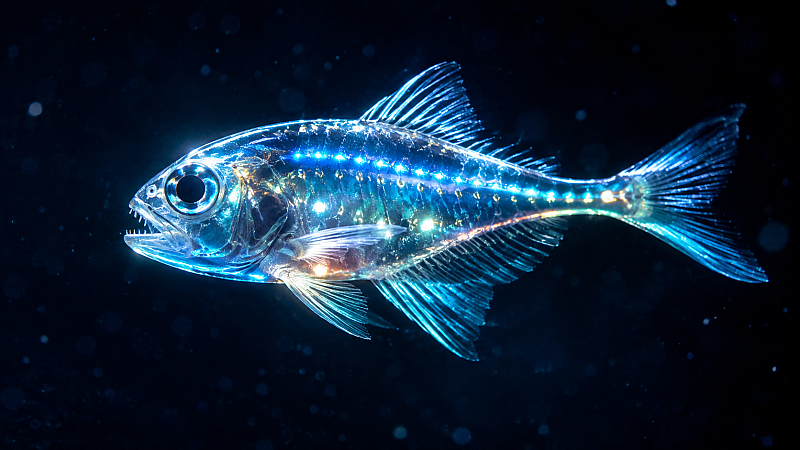
The deep ocean has long been treated as a refuge: vast, remote, and therefore resilient. A new genetic study suggests that assumption is wrong.
Researchers at Florida International University (FIU) analyzed DNA from 486 specimens of three lanternfish species and two deep-sea shrimp species collected in the Gulf between 2011 and 2023. All five showed genetic warning signs associated with elevated extinction risk, according to the study led by Pedro A. Peres of the Bracken-Grissom Lab.
The most striking finding concerned Diaphus dumerilii, a lanternfish that lost approximately 8% of its genetic diversity over twelve years — a decline comparable to, or greater than, losses recorded in some threatened and endangered animals over far longer periods.
The team also found that all five species have relatively small effective population sizes. This measure does not reflect how many animals are alive, but how many are effectively contributing genes to future generations. A species can appear abundant while depending on a much smaller group to maintain its genetic diversity.
"This challenges the idea that deep-sea species are naturally more resilient because they occupy such vast environments," Peres said. "It shows how much we can miss when we look only at population abundance without considering their genetic diversity and long-term viability."
Habitat Could Shrink by 70%
The genetic findings become more troubling when set against projections for the Gulf's future. Using climate models, the researchers estimated how suitable deep-sea habitat could change by 2050 and 2100. Four of the five species could see substantial reductions, potentially losing as much as 70% of suitable habitat.
That would place additional pressure on populations already showing limited genetic resilience — and undercuts the longstanding assumption that deep-sea animals are protected by their sheer geographic range.
Genetic diversity matters because it gives populations the variation needed to adapt as conditions change. "Genetic diversity provides the variation populations need to adapt to changing conditions, resist disease and recover from environmental disturbances," said Heather Bracken-Grissom, assistant director of the Institute of Environment's Coastlines and Oceans Division and a co-author of the study. "When that diversity disappears, a species can also lose the ability to withstand future threats."
An Unresolved Question From Deepwater Horizon
The research also speaks to the long shadow of the 2010 Deepwater Horizon oil spill, which earlier studies linked to substantial declines in deep-sea animal populations. The new study does not establish that the spill caused the genetic changes observed. Instead, it suggests some populations may have been vulnerable before the disaster — making subsequent disturbances more consequential.
"Our results suggest some deep-sea populations may have already been genetically vulnerable before the Deepwater Horizon oil spill," Peres said. "Events such as oil spills may affect populations that already have limited genetic resilience."
A Gap in How Oceans Are Assessed
The study's broader argument concerns methodology. Traditional surveys count animals; they do not measure whether those animals retain the genetic variation required to survive long-term change. By sampling DNA across multiple years, the FIU team identified risks that population counts alone would have missed.
"This study serves as a wake-up call for the scientific community," Peres said, "highlighting the urgent need to integrate genetic monitoring into biodiversity assessments and emphasizing the importance of long-term monitoring to better understand and detect changes in marine populations over time."
The study also included FIU researcher Keith Sellers and Tracey T. Sutton of Nova Southeastern University.
Source : Florida International University
Plastic Pollution in Cameroon and Africa Plastic Pollution in Cameroon and Africa

The best of Tired Earth delivered to your inbox
Sign up for more inspiring photos, stories, and special offers from Tired Earth
By signing up for this email, you are agreeing to news, offers, and information from Tired Earth. Click here to visit our Privacy Policy.


Comment