


21 Nov 2026

Tired Earth
By The Editorial Board
Alex Karp's purchase in Hälsingland has revived a question with growing relevance across Europe: when private capital buys forest, what exactly is being bought — and what is being promised to the people who live there?
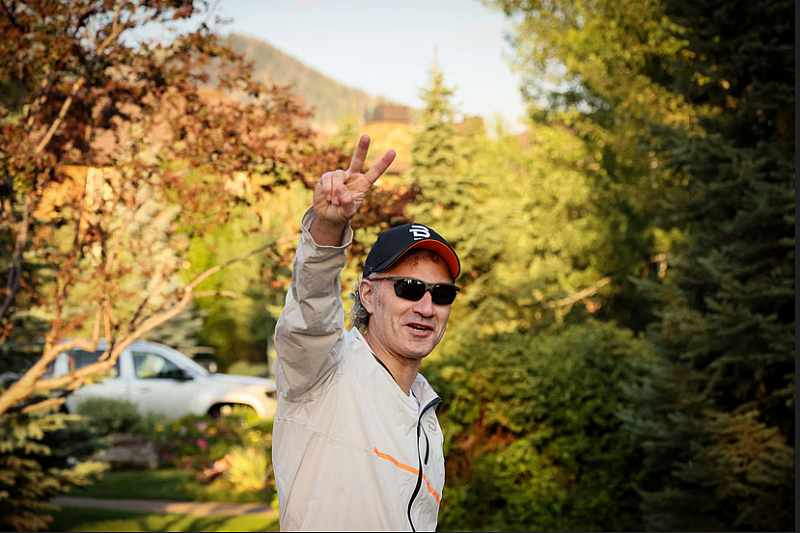
Alex Karp, CEO of Palantir Technologies. REUTERS/Brendan McDermid
The tract is large enough to be a small municipality: roughly 15,000 hectares of forest in the Storsjön area of Hälsingland, northern Sweden. The buyer, according to reporting by Le Monde and relayed by Al Jazeera, is Alex Karp, co-founder and CEO of the data-analytics firm Palantir.
It is one of the largest land purchases Sweden has seen in recent years. And it has left local residents with a question no one has answered to their satisfaction: what is it for?
The Data Centre Hypothesis
Speculation has centred on whether the land could host a large data centre — a connection made almost inevitable by Karp's day job. Palantir supplies data-analytics systems to government and military clients, including, since 2025, the Swedish armed forces.
The hypothesis, however, runs into basic physics. Data centres require enormous quantities of electricity and water, along with operational infrastructure that makes a remote northern forest an unlikely site. Experts cited in the reporting have largely dismissed the idea on those grounds.
The company that acquired the land, Caledonia Skogs, has said Karp is an avid cross-country skier and that the purchase is connected to recreation and nature. That explanation has not fully reassured residents.
The Rights That Come With the Trees
The unease extends beyond what might be built. In Sweden, the right of public access — allemansrätten — allows people to walk, forage, and ski across private land. But hunting rights and certain commercial uses are tied to ownership. Residents worry that a change of proprietor could restrict activities that form part of local life: hunting, hiking, skiing, and access to land their families have used for generations.
Forestry itself is also at stake. How the land is managed — how much is clear-cut, how much is left standing, how old the trees are allowed to grow — determines its carbon storage, its biodiversity, and its value as habitat. A change of owner is a change of forestry plan, and forestry plans are where climate commitments are either honoured or quietly abandoned.
Palantir's Wider Footprint in Sweden
The land deal has become entangled with a separate controversy. Palantir's contracts with the Swedish military have drawn criticism from unions over the absence of transparency regarding what data is collected, how it is used, and who oversees it.
Five Swedish unions representing roughly two million workers, alongside 120 European organisations, have called for the company to be banned in Europe and for existing contracts to be terminated, warning about the growing influence of private firms over sensitive information.
Whether or not the two issues are connected, they have fused in public debate. For residents, the forest purchase is not simply a property transaction. It is the arrival of a company whose core business is data, in a place whose value has always been defined by trees, water, and the people who use them.
The Question Europe Will Keep Asking
Sweden is not the only country grappling with this. Across Europe, institutional investors, pension funds, and technology executives are buying forest at scale, drawn by carbon markets, timber returns, and land as a store of value. Each purchase raises the same set of questions: what happens to public access, to biodiversity, to local livelihoods, and to the climate function of the forest itself.
In Hälsingland, the answers remain unclear. What is clear is that a billionaire can buy a forest, and the people who live beside it can do little but ask why.

Plastic Pollution in Cameroon and Africa Plastic Pollution in Cameroon and Africa

The best of Tired Earth delivered to your inbox
Sign up for more inspiring photos, stories, and special offers from Tired Earth
By signing up for this email, you are agreeing to news, offers, and information from Tired Earth. Click here to visit our Privacy Policy.


Comment