


15 Nov 2026

Tired Earth
By The Editorial Board
Palau’s President, Surangel Whipps Jr., addressed more than 100 heads of state gathered in Antalya for COP31. Representing a country responsible for just 0.03% of global emissions, he denounced the injustice of a crisis threatening the very existence of Pacific nations.
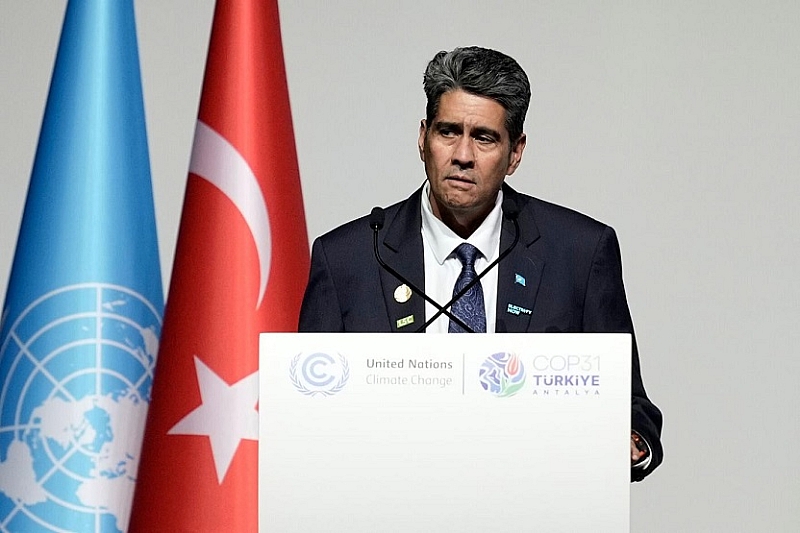
“You might as well bomb us. It might be easier than watching climate change tear our homes apart, piece by piece.” These words, spoken by Palau’s President, Surangel Whipps Jr., before more than 100 world leaders gathered in Antalya for the 31st Conference of the Parties to the United Nations Framework Convention on Climate Change (UNFCCC), capture the deep frustration felt by Pacific nations.
“At Glasgow, I said, ‘You might as well bomb us,’” the president recalled on November 12. “It might be easier than watching climate change tear our homes apart, limb by limb. We are at war with a crisis we did not create — a war that no peace treaty can end; only urgent action can.”
Pacific countries account for just 0.03% of global greenhouse gas emissions. Yet they are among those paying the highest price. The United Nations Environment Programme (UNEP) warning that the 1.5°C warming threshold is on the verge of being breached makes the need for COP31 to reverse this trend all the more urgent.
Three demands from Palau
President Whipps first called for science to be placed back at the heart of decision-making. “Action without science is a ship without a rudder,” he declared, calling for the next IPCC assessment report to be delivered by 2027 or early 2028. Palau is also demanding every possible effort to limit the overshoot of the 1.5°C threshold, which it describes as “an existential threat to our food, our economies and our sovereignty”. He also recalled the International Court of Justice’s (ICJ) conclusion that failure to meet climate obligations entails state responsibility.
The second demand is a renewable energy revolution. “The Pacific is ready to become the first region in the world powered entirely by renewable energy,” he said, inviting partners to join the investment prospectus launched at the 55th Pacific Islands Forum.
Finally, on climate finance, he called for investment in the Pacific Resilience Facility, a regional grant-based mechanism designed to avoid increasing debt. “We have surpassed $200 million towards our $500 million target, including $100 million from our own resources. We should not have to pay for our survival, but we are taking action.” He urged all countries and partners to match this commitment.
The land as mother, the ocean as father
The president recalled that in Palau, the land is known as “our mother” and the ocean as “our father”. “They take care of us, and we must take care of them. Let COP31 turn hope into decisive action.”
COP31, taking place from November 9 to 20, 2026, in Antalya, Türkiye, brings together the Pacific parties: the Cook Islands, the Federated States of Micronesia, Fiji, Kiribati, the Marshall Islands, Nauru, Niue, Palau, Papua New Guinea, Samoa, the Solomon Islands, Tonga, Tuvalu and Vanuatu.
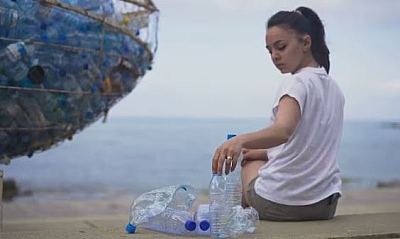
Plastic Pollution in Cameroon and Africa Plastic Pollution in Cameroon and Africa

The best of Tired Earth delivered to your inbox
Sign up for more inspiring photos, stories, and special offers from Tired Earth
By signing up for this email, you are agreeing to news, offers, and information from Tired Earth. Click here to visit our Privacy Policy.

Comment