

27 Oct 2026
Tired Earth
By The Editorial Board
Ecosystem degradation could expose millions of jobs and trillions of euros in economic activity to major disruptions. An analysis by Global Canopy highlights how deeply European economies depend on the resources and services provided by nature.
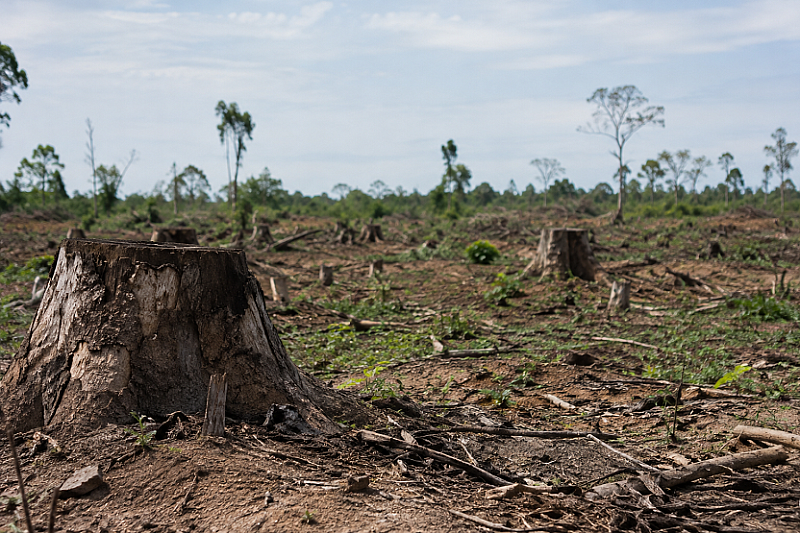
The decline of ecosystems poses a serious threat not only to biodiversity but also to economic stability. According to an analysis by Global Canopy, up to 140 million jobs across the European Union, the United Kingdom and Switzerland could be exposed to the consequences of nature loss.
This represents around 60% of total employment in these territories, highlighting how strongly economic activities depend on healthy ecosystems. Agriculture, industry, construction, trade and supply chains all rely, directly or indirectly, on natural resources and favourable environmental conditions.
The analysis draws on the ENCORE Insights: Country Dashboard, released during COP17 in Armenia, and examines how nature loss could disrupt employment, wages, production and trade.
Germany has the highest number of potentially affected jobs, with up to 21.8 million positions exposed, representing approximately €1 trillion in annual wages.
In the United Kingdom, the figure reaches 20.6 million jobs, associated with around £650 billion in annual wages. France could see 16.3 million jobs exposed, representing an estimated €813 billion in annual wages.
The estimates also include 5.8 million jobs in the Netherlands and 2.7 million in Switzerland.
These figures do not mean that all these jobs will disappear. Rather, they indicate the number of positions that could be affected, to varying degrees, by the economic consequences of ecosystem degradation.
Many businesses depend on essential natural processes, including water availability, soil fertility, pollination, climate regulation and access to raw materials. When these systems deteriorate, the effects can spread throughout entire supply chains.
Companies may face shortages, production disruptions and rising costs. Droughts, wildfires and floods can damage infrastructure, disrupt transport and make working conditions more difficult.
Such pressures can lead to reduced working hours, lower wages, changing skill requirements and job restructuring. In the most severe cases, businesses may be forced to cut staff or shut down entirely.
Claudia Gray, Global Canopy’s nature finance lead, stresses that the scale of these figures reveals how livelihoods depend on the natural systems underpinning national economies.
The risks extend beyond employment. According to the analysis, up to €8.2 trillion worth of goods and services consumed annually across the EU, the UK and Switzerland could be affected by nature loss—approximately half of the region’s total consumption.
Ecosystem degradation can reduce resource availability, increase production costs and drive up prices. Supply disruptions may consequently affect consumers, businesses and public finances.
International trade is also vulnerable. Up to €3.5 trillion in annual exports from these territories could be exposed to the consequences of nature loss.
These figures highlight the interconnected nature of modern economies: environmental damage affecting one resource or region can have consequences for businesses and consumers far beyond its point of origin.
Human-made infrastructure, including roads, electricity networks, ports and buildings, is widely recognised as essential to economic activity. Yet ecosystems provide equally vital services, even if their contribution is often less visible.
Forests store carbon and help regulate the water cycle. Wetlands reduce certain flood risks, healthy soils sustain agricultural production, and pollinating insects support the reproduction of many crops and wild plants.
When these natural functions deteriorate, the costs may emerge gradually through lower yields, property damage, industrial disruption and rising prices. These impacts can also reinforce one another, increasing the vulnerability of businesses and households.
Global Canopy urges governments, central banks and businesses to better incorporate nature-related risks into their economic and financial decisions. Protecting nature should no longer be treated as separate from economic policy.
A clearer understanding of dependence on natural resources could help companies anticipate supply disruptions, diversify sourcing and strengthen resilience. Governments, meanwhile, need to account for the economic consequences of ecosystem destruction when shaping investment and development policies.
Restoring natural habitats and reducing pressures on ecosystems can help preserve the conditions necessary for sustainable economic activity.
Global Canopy’s estimates are a warning signal, not a prediction that these jobs will inevitably be lost. Nevertheless, they underline a fundamental reality: European economies cannot function independently of nature. They depend on it to produce goods, sustain trade and support millions of livelihoods.
Protecting ecosystems is therefore not merely an environmental imperative. It is also essential to economic stability, supply security and the protection of jobs.

The best of Tired Earth delivered to your inbox
Sign up for more inspiring photos, stories, and special offers from Tired Earth
By signing up for this email, you are agreeing to news, offers, and information from Tired Earth. Click here to visit our Privacy Policy.


Comment