


24 Oct 2026

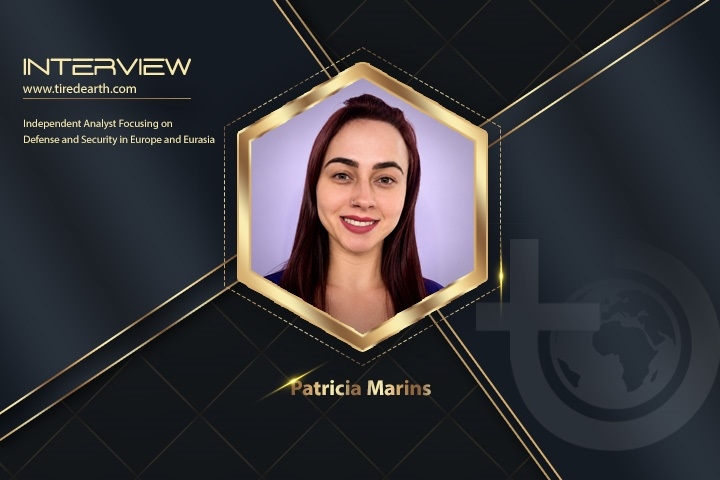
Patricia Marins
Double standards have been the hallmark of Grossi's management.
1. The selection of the next UN Secretary-General is taking place at a time when multilateralism is facing serious challenges. In your view, what are the most important qualities the next Secretary-General should have?
Frankly, under the Trump doctrine, the UN Secretary-Genera, whoever it may be, has become a mere figurehead. We are heading toward a multipolar world where international forums carry less relevance and, obviously, the law of the jungle prevails. Trump's fiasco in Iran has accelerated the end of the Pax Americana.
The big question today is not about the next UN Secretary-General, but rather whether the White House's onslaughts against multilateralism will end with Trump's departure or if they will become a continuous policy. Europe's silence in the face of this is deafening. The continent still possesses important opinion makers and solid welfare and democratic policies, but its subservient position to American policies and the lack of a European leadership with its own identity will increasingly push Europe into ostracism.
2. To what extent is the selection of the UN Secretary-General genuinely independent, and how much is it influenced by the interests of the five permanent members of the Security Council?
The P5 are in a moral crisis. The Russians are bogged down in a years-long war against Ukraine, which is financed and armed by other members of the Council. The Chinese trample on international law and norms by building bases on atoll after atoll. The French and the British are mired in domestic political crises, still trying to find their role in this new world.
And the Americans under Trump? In a misguided way, they attack multilateralism as a means to prevent their loss of relevance. The UN tends to become a shameless forum with absolutely no modesty before public opinion, driven by the moral decay of its members and its breakdown in global governance.
3. In the current circumstances, are the United States, China, and Russia seeking a Secretary-General who can balance their interests, or one whose views are closer to their own?
The statu quo is their point of equilibrium. Disputes among these members certainly exist, but there is also an alignment when it comes to blocking reforms. We could list here at least 10 countries that hold global relevance and are pushing for reforms. The UN is agonizing, at times discredited and held hostage by the American budget, and at others being weaponized in a dispute among the P5 to choose the new Secretary-General.
Today, with Bachelet's withdrawal from the race, everything points to Rafael Grossi becoming the next Secretary-General, representing a strong alignment with the US-Israel establishment. The American policy seems to be that whatever cannot be conquered must be discredited, but so far they are betting on this election. Names like Rebeca Grynspan and Carolyn Rodrigues-Birkett will hold relevance, but they are incapable of defeating Grossi given his American backing.
4. One candidate is Rafael Grossi, Director General of the IAEA. Given his record on Iran’s nuclear issue and the recent Iran-Israel-US war, how might this background shape his potential approach as Secretary-General?
Grossi's stance at the helm of the agency he still leads has been one of total alignment with the interests of certain governments. This became evident at several moments even outside the Iranian issue, such as the AUKUS matter, where the agency played a completely condescending and advisory role, vastly different from the meddling role it sought to play regarding the Brazilian nuclear submarine. Double standards have been the hallmark of Grossi's management.
5. How would you assess Antonio Guterres’s performance as UN Secretary-General, particularly in dealing with wars, humanitarian crises, climate change, and the weakening of multilateralism? What have been the main achievements and shortcomings of his tenure?
If Grossi is the personification of the weaponization by the US-Israel axis, Guterres was the personification of impotence. He turned a blind eye to humanitarian issues, proved incapable of containing or appeasing conflicts, and under his watch, the UN was pushed further and further into irrelevance.
6. What could ensure that the next Secretary-General remains genuinely independent of the major powers rather than becoming a spokesperson or executor of their interests?
By all indications, the next Secretary-General will be aligned with the axis I previously mentioned. Given the current moral crisis, the trend points toward greater discredit for the UN due to excessive partiality. It remains to be seen how the organization will behave in the face of this and whether it will have the voice to restrain potentially biased stances. Only a broad reform and a new charter of commitment can give the UN a new lease on life.

The best of Tired Earth delivered to your inbox
Sign up for more inspiring photos, stories, and special offers from Tired Earth
By signing up for this email, you are agreeing to news, offers, and information from Tired Earth. Click here to visit our Privacy Policy.
Comment
Reply