



19 Sep 2026

Nirere Sadrach
Ugandan
The main goal of the Youth Zero Waste Ambassadors Program is to empower the next generation of zero waste implementers in local communities of Uganda.
1. Could you briefly introduce yourself and tell us how you got involved in environmental activism?
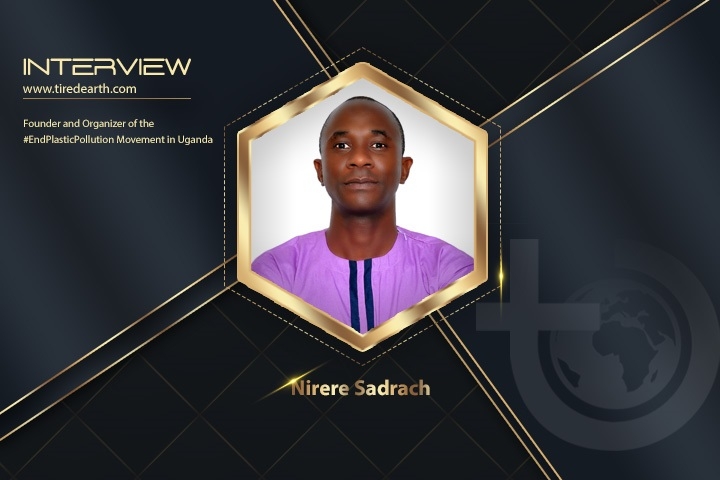
I am Nirere Sadrach, Founder and Team Leader of End Plastic Pollution. Growing up in Uganda has exposed me to the impacts of both the waste crisis and climate crisis, I live in communities with no capacity to cope with the increasing amounts of waste generated nor are we prepared for a changing climate. It is for this reason that as young people we must contribute to addressing these challenges, build resilience and transform our communities. Therefore, in pursuit of finding ways I can contribute the fight, I got introduced to environmental activism during my work with the youth climate movement.
2. What inspired you to found End Plastic Pollution Uganda in 2020?
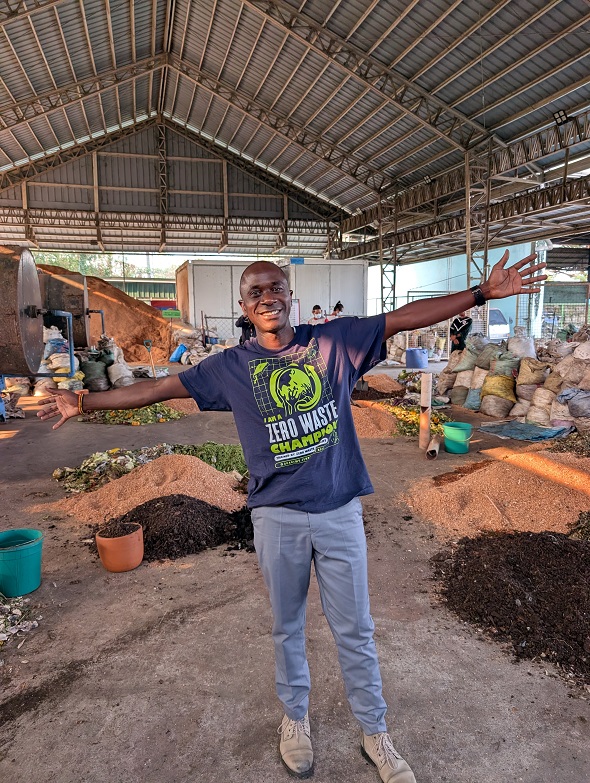
End Plastic Pollution is growing as an action oriented environmental organization addressing the waste crisis with focus on the intersection between people, the environment and the economy. We are working not only to advocate for policy changes but also implementing solutions including the zero-waste model to unlock opportunities in the waste sector. Through the Kollekt Initiative we are running the Kollekt Village as a hub for learning, demonstrating and implementing the zero-waste model. With the FLOWERS (Facilitating Local Organic Waste Exchange for Regenerative Systems) project we are now investing in establishing managing organic waste through BSF farming, Anaerobic Digestion and Composting.
3. You recently launched the Youth Zero Waste Ambassadors Program. What are its goals and how does it work?
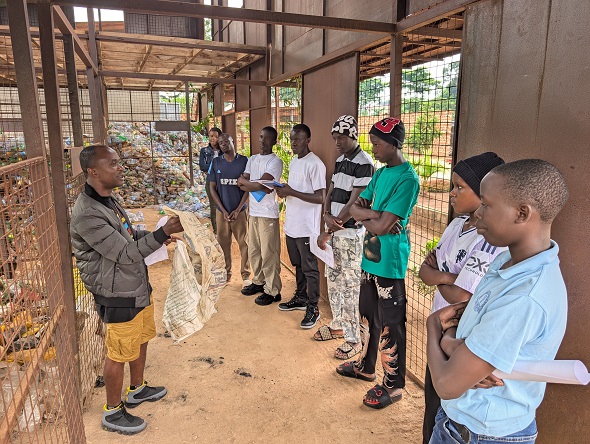
The main goal of the Youth Zero Waste Ambassadors Program is to empower the next generation of zero waste implementers in local communities of Uganda. The program is delivered to cover 4 training modules to help youth understand the science of waste, how to go waste free, the steps to implement the zero-waste model, collective action and community mobilization. Youth are trained for 2 weeks online have 2 days of an in-person training at The Kollekt Village through which they get to do a hands-on training involving waste segregation and working with waste pickers, conducting a community waste assessment, brand auditing and communication skills.
4. What are the biggest challenges in fighting plastic pollution and implementing zero waste in Uganda today?
Poor waste management remains one of the biggest challenges in many Ugandan communities, practices of mixing waste without waste segregation is one of the biggest challenges in fighting plastic pollution and implementing zero waste. The mixing of all kinds of waste makes it difficult to recover the valuables in it, remember if an item cannot be collected then it can be recycled or composted.
Dumping and landfilling waste is another challenge Uganda is facing. The increasing amounts of waste dumped in landfills like Kiteezi and Buyala are becoming uncontrollable, contributing to more methane output and putting a huge cost for government to manage. The Kiteezi landfill recently collapsed and killed over 35 people and destroyed people’s homes including other properties. Such events will still happen if we continue dumping and landfilling our waste as well expose government’s inadequate capacity to manage waste.
Almost 60% of the total waste collected in many Ugandan communities is organic waste, about 11% are recyclable, the rest are residuals, this clearly shows that clearly with dumping, landfilling, and mixing of waste is robbing us much of what can be utilized.
Despite Uganda launching the National Cleanup Day, many communities are still left with uncollected waste after these cleanups which ends up being burned. The burning of waste contributes to emitting of dangerous greenhouse gasses leading to climate damage and other toxic chemicals that are released which can cause respiratory infections.
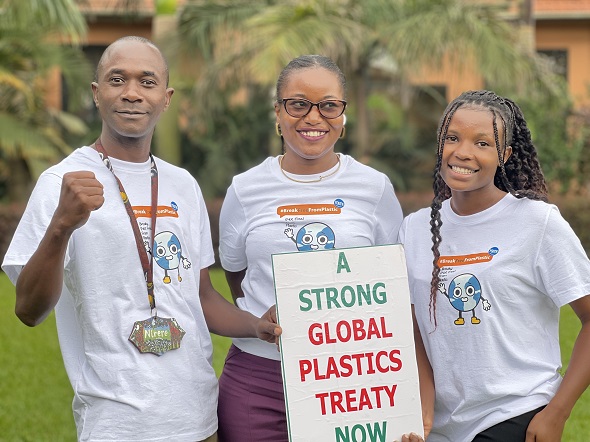
The weakness with our policies can go unmentioned. It is the role of government to manage waste; therefore, it must strengthen laws to ensure that polluters are held accountable, there is reduction in amounts produced, a redesign of products packaging and delivery to eliminate single-use plastic. In addition, there must be a strong global plastics treaty that can influence policies to ensure that large polluting countries are accountable for their harm in the global south, put production caps, ensure adherence to the extended producer responsibility.
5. How do you see the connection between waste management and the climate crisis?
The waste crisis is directly linked to the climate crisis; poor waste management drives global warming by releasing massive amounts of greenhouse gases into the atmosphere. Landfilling organic waste produces methane gas. The waste sector is responsible for about 20% of human driven methane emissions globally. Open burning releases black carbon and toxic smoke which accelerates warming, this adds to the damage caused by incineration.
6. Is there anything you would like to add or a message you want to share with our audience?
We are facing a waste crisis and its time that we invest in solutions that work, understand the needs of our communities. There is too much waste being generated which exceeds our capacity to manage, the time is now to change the system.

The best of Tired Earth delivered to your inbox
Sign up for more inspiring photos, stories, and special offers from Tired Earth
By signing up for this email, you are agreeing to news, offers, and information from Tired Earth. Click here to visit our Privacy Policy.
Comment
Reply