


29 Nov 2026
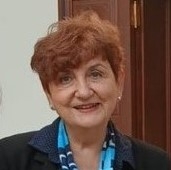
Leyla İrten
Turkish
Although COP31 concluded without a clear agreement, I hope that the momentum it created will encourage stronger collaboration among local authorities, civil society, cultural institutions and artists.
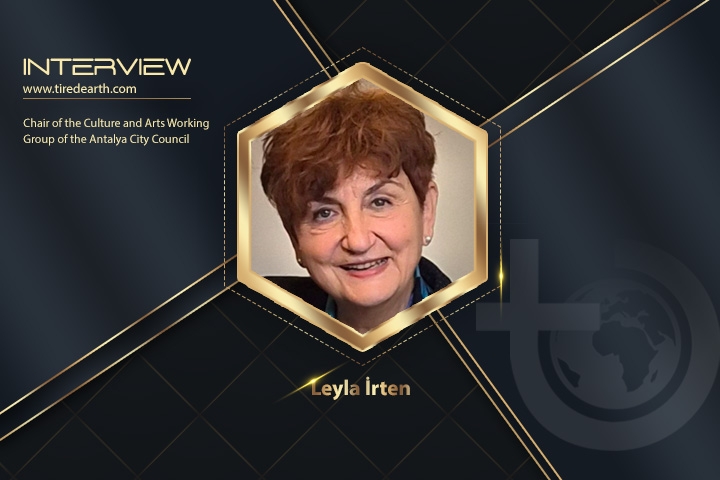
By Selva Ozelli
Leyla İrten chairs the Culture and Arts Working Group of the Antalya City Council. The United Nations Climate Change Conference (COP31) took place in Antalya from November 9–20, 2026, with art and cultural heritage installations serving as a central pillar of Türkiye's presidency. They connected ancient Anatolian history, archaeology, sustainable materials, and Mediterranean ecology to modern climate action.
She also writes as a volunteer culture and arts columnist and contributor on platforms such as GOART.CLUB and connects with civic and arts groups, including Güzel Sanatlar Derneği (Fine Arts Association, GÜSAD), Modern Zamanlar Derneği (Modern Times Arts Association), US-DER (International Artists’ Migration and Adaptation), and ÇYDD, where she serves as the Antalya Branch Mentornity Project Coordinator.
Antalya is a major Mediterranean port city and tourism hub on Türkiye’s southwestern coast whose heritage spans the Hellenistic, Roman, Byzantine, Seljuk, and Ottoman eras. Positioned along the Gulf of Antalya beneath the Taurus Mountains, the city is recognized as the centerpiece of the Turkish Riviera, drawing tens of millions of international visitors annually.
Antalya is home to Antalya Museum (currently being rebuilt), which is paired with the Olympos Ancient City archaeological open-air site in Kumluca. Other sites include Antalya Ethnography Museum, Suna & İnan Kıraç Kaleiçi Museum, Atatürk House & Museum, Antalya Toy Museum, Anatolia Toy Museum, Dervish Lodge Museum (Mevlevihane), Sandland, and Antalya Necropolis Museum.
COP31 Key Installations & Exhibitions:
COPArt & Green Zone Exhibition: Spanning 65,000 square meters of the 1.1-million-square-meter COP31 venue—including an 8,100-square-meter indoor Green Zone space—COPArt featured over 1,000 artworks and 57 installations on sustainability and environmental degradation in an exhibition titled "Still Possible."
Türkiye's Blue Zone Pavilion: Built from recycled materials like excavated soil, coffee grounds, scrap metal, copper, and wood, the pavilion followed the theme "Roots of Adaptation and Resilience." It traced 12,000 years of Anatolian history from Göbeklitepe to the present, pairing traditional crafts (such as filigree metalwork and glassblowing) with contemporary art.
Leyla İrten contributed to the COP31 art and cultural agenda in Antalya through the following events, presenting a strategic cultural vision for the host city developed by the Council’s Culture and Arts Working Group during the “21st Century Antalya Workshops,” organized in 2025 by the Citizens Council.
Culture at COP31 Special Side Event. On November 19, 2026, she participated in the international side event "Culture is Climate Action, Put into Practice Through 'İmece' – Celebrating Cultural Actors at COP31," hosted at AKMED in Antalya.
Antalya’s Culture & Arts Actors Session. During the event's session on local initiatives, İrten delivered a presentation on behalf of the Antalya City Council's Culture and Arts Working Group titled "ROTA: A City of Art – A Strategic Vision for Antalya" ("Rota: Sanat Şehri Antalya – Antalya için Stratejik Vizyon"), outlining how local arts and cultural infrastructure connect with sustainability and climate action.
1. Tell us about your educational and professional journey toward becoming the Chair of the Culture and Arts Working Group of the Antalya City Council.
I graduated from the Italian Lycée and began studying in the Sociology Department at Bosphorus University. Although I did not complete my studies there, I continued with various certificate programmes in communications, strategic planning,management and corporate communications in Türkiye and abroad. After a long career in various support and management roles in the human resources, training, corporate social responsibility, and corporate communications departments of international companies in Istanbul, I moved to Antalya in 2016. My last position was Corporate Communications Manager at an international company. Because of the professional environments in which I worked, a strategic planning approach has been central to my activities here in Antalya. The Culture and Arts Working Group at the Antalya Citizens Council is one of the Council’s 14 working groups, and the members of each group are representatives of different NGOs, local authorities, and other organizations. (Please see the structure of the Council below.*) Each group’s members elect the group’s head by voting. I was elected in March 2025, when I was a member of the group representing ÇYDD, an NGO.
2. Did you have any role models who helped prepare you for this role?
Both my membership and my role are voluntary, so I try my best to represent my group by monitoring relevant issues in the city and creating public awareness through reports and press bulletins, which I bring to the attention of the relevant authorities, as previous heads of the group did.
3. Tell us about the vision and mission of the Culture and Arts Working Group of the Antalya City Council.
Let me first provide some brief information about the Antalya Citizens Council, also referred to as the Antalya City Council. It is a participatory advisory platform that brings together public institutions, civil society organizations, professional chambers, and citizens on a voluntary basis for collective thinking. The Council’s Culture and Arts Working Group is one of its 14 working groups.
The Culture and Arts Working Group conducts studies on inventory and documentation, the protection of cultural and natural assets, urban culture and urban studies, urban identity, the diversity and wider promotion of cultural activities throughout the city, and related areas. It develops action programmes and proposes solutions in these fields.
4. Tell us about your side event at AKMED for COP31 on November 19.
Antalya City Council’s Culture and Arts Working Group has been invited as one of Antalya’s art “actors”. The full day event has been organized by “Culture at COP 31 Platform”
5. Tell us about "ROTA: Antalya – A City of Art (A Strategic Vision for Antalya)," presented by the Antalya City Council's Culture and Arts Working Group.
ROUTE: ANTALYA, CITY OF ART (A Shared Vision for the Artistic Future of Antalya)
The vision of “Route: Antalya, City of Art” emerged from the need to make Antalya’s historical, natural and cultural richness more visible through the arts and to establish a strong artistic identity for the city. Antalya already possesses a significant cultural and artistic heritage, with its diverse artistic activities, artists, cultural institutions, universities, civil society organizations and local authorities. However, this potential needs to be brought together within a common strategy, a sustainable arts policy and a long-term roadmap. The fundamental starting point of this vision is to unite Antalya’s existing artistic potential and create a genuine spirit of teamwork.
In this context, the arts session held within the framework of the 21st Century Antalya Workshops, organized by the Antalya City Council, brought together representatives of different institutions and organizations, arts professionals and independent artists on a common platform. A consultative board comprising 77 participants from approximately 39 stakeholders was established. Through preparatory meetings, the current state of Antalya’s artistic environment was assessed, identifying its strengths, areas for improvement, opportunities and threats. On 16 April 2025, a three-session panel addressed Antalya’s artistic past and present, the relationship between art, the city and the environment, and proposals for a future-oriented arts policy.
The main objective of this vision is to move beyond temporary events and establish a planned, measurable, participatory and sustainable arts ecosystem. In the short term (0–1 year), priorities include completing an assessment of the current situation, establishing an Arts Board, increasing the visibility of the city's arts policy, and developing infrastructure for partnerships and resource management. In the medium term (1–3 years), the goals include establishing a strategic framework for Antalya’s Arts Policy, developing a cultural inventory, integrating art into the city’s identity, improving the quality of arts education, and introducing initiatives such as annual art festivals and a biennial.
In the long term, the ambition is to establish Antalya as a recognized arts centre at both national and international levels. Developing art-focused tourism strategies, building partnerships with international cultural and artistic networks, and supporting digitalization and new media arts are important components of this goal. Antalya aims to be known not only for its sea, sand, sun and historical heritage, but also as a city of year-round artistic events, festivals, exhibitions and cultural production. In this way, art will become an integral part of not only the city's cultural identity but also its tourism sector and local economy. Climate related effects on cultur and arts in Antalya has been a special chapter of the strategy as well (such as derinine climate effects on art works, precautions to be taken, supportive and collaborative actions with related authorities for cultural heritage’ conservation (climate effects’ definition etc.)
Achieving this transformation requires participation and cooperation among institutions. Local authorities, universities, public institutions, foundations, associations, artists, cultural organizations and the private sector should come together on a shared platform. In particular, the tourism and agriculture sectors, which are among the main drivers of Antalya’s economy, are expected to play an active role in supporting (sponsoring in general) the arts. Expanding arts education, developing a cultural inventory, reflecting the expectations and suggestions of local residents in decision-making processes, and establishing feedback mechanisms are also essential elements of this participatory approach.
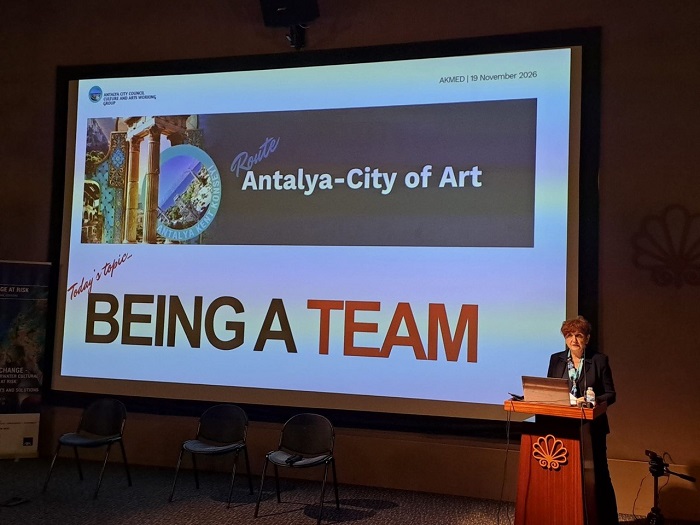
“Route: Antalya, City of Art” is not merely a plan for organizing art events; it is a long-term vision for collectively shaping the cultural future of the city. Its success depends on shared intelligence, mutual trust, sustainable partnerships and a sense of collective responsibility that goes beyond individual efforts. Our guiding principle is to act with a “Not Me, but We” approach: embracing solidarity rather than competition, shared goals rather than fragmented initiatives, and lasting policies rather than temporary solutions. Our ultimate aim is to transform Antalya’s artistic potential into a collective strength and establish the city as a vibrant, creative city that fosters sharing and is internationally recognized as a City of Art.
6. The United Nations declared 2027 the International Year of Sustainable and Resilient Tourism. Is your organization planning cultural events for next year and for COP32 in Ethiopia?
I cannot speak on behalf of the City Council, but we will follow the outputs, I would say, personally would like to attend… We’ll see…
7. Tell us about the international groups you collaborate with.
As I mentioned, our working group monitors issues affecting the city and prepares reports on them. We try to compare the city’s cultural and artistic activities with those of cities abroad. Although we do not currently collaborate with similar institutions abroad, we plan to do so, especially with counterpart institutions in Barcelona.
8. Is there anything else you would like to add?
I believe that culture and the arts should be an integral part of sustainable urban development and climate action, rather than being treated as separate fields. Although COP31 concluded without a clear agreement, I hope that the momentum it created will encourage stronger collaboration among local authorities, civil society, cultural institutions and artists. Beyond formal agreements, meaningful local initiatives and collective action can help turn shared aspirations into tangible and lasting change. My hope is that Antalya will continue to build on this momentum and transform its rich cultural potential into a lasting and shared vision for the future.
9. How can people reach you?
Antalya City (Citizens) Council (please add “To the attention of the Culture & Arts Working Group”)
Address: Konyaaltı Cad., Atatürk Parkı içi, No. 55, ANTALYA
Tel.: 0242 243 69 92
Email: info@antalyakentkonseyi.org.tr
Email: genelsekreterlik@antalyakentkonseyi.org.tr
My personal e-mail address is lirten@gmail.com
Plastic Pollution in Cameroon and Africa Plastic Pollution in Cameroon and Africa

The best of Tired Earth delivered to your inbox
Sign up for more inspiring photos, stories, and special offers from Tired Earth
By signing up for this email, you are agreeing to news, offers, and information from Tired Earth. Click here to visit our Privacy Policy.
Comment
Reply