


24 Oct 2026
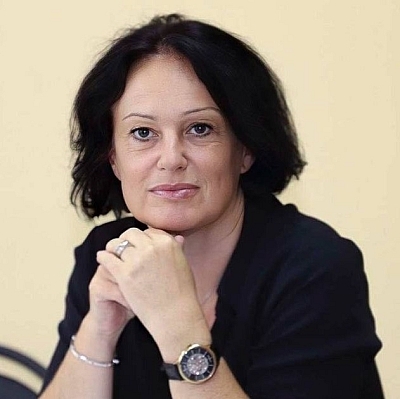
Karine Bechet
"The UN Secretary-General represents the dominant geopolitical power, and this is guaranteed by the selection procedure"
1. At a time when the UN is experiencing profound geopolitical tensions and its role is increasingly being challenged, what should be the absolute top priority of the next Secretary-General in order to strengthen the organization’s role?
The question of the UN’s role does not depend on its Secretary-General; it is a much broader issue. If we expect an international organization to resolve conflicts between states in a binding manner—that is, to impose a will superior to that of the state—this means that the state is no longer sovereign, because something stands above it. That is the system of globalization.
The UN can only encourage states to reach compromises, but compromises are not always possible, and it is important to understand this. Therefore, the UN is sometimes powerless and, as shocking as that may seem, this is normal.
The question, then, is not one of strengthening its role, but of reconsidering its legitimacy. We will have to wait for a new international order to emerge from the ruins of the current one for that legitimacy to become apparent. It will then be possible either to reform the UN so that it corresponds to the new order, to create a new organization, or to establish new mechanisms for international cooperation. Let us remember that universal organizations of this kind have not always existed; states cooperated for centuries without them. The League of Nations emerged from the First World War, and the UN from the Second. We will see what kind of system emerges from the conflict that began on the Ukrainian front and has not yet unfolded in its full dimension.
2. In the face of growing rivalries among the major powers and repeated deadlocks in the Security Council, will the next Secretary-General genuinely be able to strengthen the UN’s actions, or will they remain constrained by the balance of power among its permanent members?
The issue is not personal, but systemic. The UN Secretary-General represents the dominant geopolitical power, and this is guaranteed by the selection procedure. Member states put forward candidates, the list is drawn up by the presidents of the General Assembly and the Security Council, online debates are held, and the Security Council and the General Assembly “exchange views” on the candidates, bearing in mind that the permanent members have veto power. In other words, they negotiate. A debate is then held in the General Assembly, which appoints the Secretary-General.
Thus, the position can only be held by someone who is “part of the system.” In this sense, the UN Secretary-General will always be constrained by the internal balance of power. They are a product of that balance and cannot free themselves from it.
3. Security Council reform is regularly presented as essential to making the UN more representative. Will the next Secretary-General genuinely have the means to advance this reform despite the conflicting interests of the major powers?
Reform will move forward if countries are ready for it. However, it is important to understand that the composition of the Security Council had a rationale rooted in the Second World War. Indeed, this was what gave it its legitimacy.
Changing this institution while a geopolitical conflict is underway and the geopolitical balance of power remains unsettled would be a dangerous mistake. Furthermore, it would significantly undermine the institution’s legitimacy.
Security Council reform must be part of a broader reconsideration of the UN as an institution. However, it is still too early for that. In any case, reform will not come about through the will of the Secretary-General alone. Those who hold this position are generally rather weak figures, precisely because they are compromise candidates.
4. With climate change accelerating and environmental crises multiplying, what place should environmental protection and the fight against climate change occupy among the priorities of the next UN Secretary-General?
The first task would be to depoliticize the environmental issue and free it from the ideological straitjacket in which it is confined, so that the focus can genuinely be on environmental protection.
5. Among the candidates currently in the running, what qualities do you consider essential for the next UN Secretary-General to address today’s crises?
The essential qualities required of the next UN Secretary-General—and, more broadly, of anyone in politics today—would be moral integrity, political understanding, and moral convictions.
Unfortunately, these are precisely the main qualities that cause candidates to fail, drive away those who might support them, or discourage people from entering politics.
6. How would you assess António Guterres’s years at the helm of the UN, particularly in terms of peace, climate, and environmental protection?
António Guterres demonstrated the weakness and the very affability that the globalist elites running the UN expected of him. There is reason to fear that his successor will follow this well-established path.

The best of Tired Earth delivered to your inbox
Sign up for more inspiring photos, stories, and special offers from Tired Earth
By signing up for this email, you are agreeing to news, offers, and information from Tired Earth. Click here to visit our Privacy Policy.
Comment
Reply