



03 Oct 2026
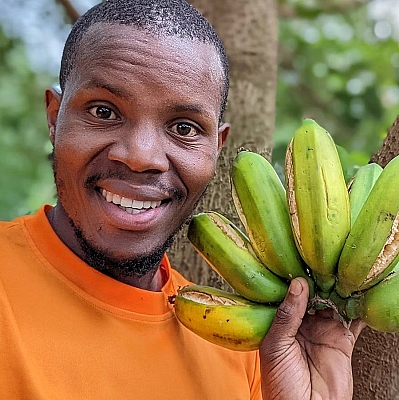
Jusper Machogu
Kenyan
We use manure, no pesticides, eat through profit by hiring manual labor, and whatever profit is left is eaten during and after harvesting.
1. You are both a farmer and an agricultural engineer working in rural Kenya. From your direct experience, what are the biggest challenges currently facing smallholder farmers in Kenya, and what practical solutions do you believe could make the greatest difference?
Small-scale farmers are facing climate shocks but that's has been there throughout, plus, we can always adapt. We produce so little per ha compared to our counterparts in the West and even Asia. It boils down to how we farm. We use manure, no pesticides, eat through profit by hiring manual labor, and whatever profit is left is eaten during and after harvesting.
Synthetic Fertilizer rich in N, P and K is the easiest and most practical, plus agrochemicals. Farm machinery (even the small ones), would also make it easy and quick to produce food. Irrigation and value addition are a distant third and forth.
2. You have spoken extensively about the importance of affordable and reliable energy for Africa’s agricultural development. How do you see the role of fossil fuels compared with renewable energy in improving agricultural productivity and rural livelihoods in Kenya?
Renewables are electricity. Most of Sub-Saharan primary energy, almost 90% for most countries, I'd from burning biomass. It doesn't get greener than that. Renewables make sense for pumping water for irrigation and maybe drying produce/cereals for storage. Diesel, petrol and gas would power various small machines, pumps, tractors, and even desalination plants.
3. Water availability is a major issue for many rural communities, while farmers also face droughts and changing rainfall patterns. What approaches do you think Kenya should prioritize to improve water security for agriculture without creating new environmental problems?
Sinking boreholes throughout the country - it's doing that but for domestic use. And harvesting rain water in dams. Desalination plants make much more sense because we are unlikely to run out of ocean/ salt water. We should focus on improving human life before we can think about the environmental issues, just like the West and China.
4. You have been critical of some mainstream approaches to “sustainable agriculture” and environmentalism. From the perspective of a farmer, what do you think policymakers and environmental organizations often misunderstand about the realities of farming in rural Africa?
They don't understand how agriculture works. Leaving sustainable agriculture for a minute, there is no way 2 people are going to feed 100 people without tractors, fertilizers and other modern agricultural practices. Africa is mostly made up of organic farmers aka small-scale farmers. A continent where 60-70 people are involved in agriculture but cannot feed themselves!
The closer you are to mother nature, the more the likelihood of you sleeping angry. Imagine a life without refrigeration, trucks, animal and plant breeding and having to do everything in the farm manually. That's our way of life here.
5. Looking ahead 10–20 years, what would you like to see change in Kenya’s agricultural sector—from farming technology and land management to energy and environmental policy—and what role should farmers themselves play in shaping those changes?
In 20 years’ time, Africa’s agricultural sector should be on par with those of China, Europe, and the United States.
We should:
I look forward to an Africa that exports fully processed agricultural products: roasted coffee instead of coffee beans, chocolate instead of cocoa, packaged tea instead of sending tea to international packers, and so on.
Let’s pursue prosperity first. Everything else comes second.
Farmers want to maximize the returns from their hard work. They will find ways to conserve their soil, water, and environment when doing so helps maintain profitability. This is already happening in Kenya, where tea farmers plant trees alongside their tea on the same land.

The best of Tired Earth delivered to your inbox
Sign up for more inspiring photos, stories, and special offers from Tired Earth
By signing up for this email, you are agreeing to news, offers, and information from Tired Earth. Click here to visit our Privacy Policy.
Comment
Reply