


06 Nov 2026
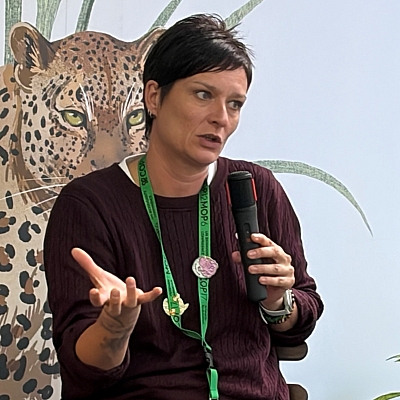
Dr. Elena Lara
Sustainable aquaculture should provide nutritious food while protecting marine ecosystems, biodiversity and animal welfare. Regenerative aquaculture should also aim to improve ecosystem health.
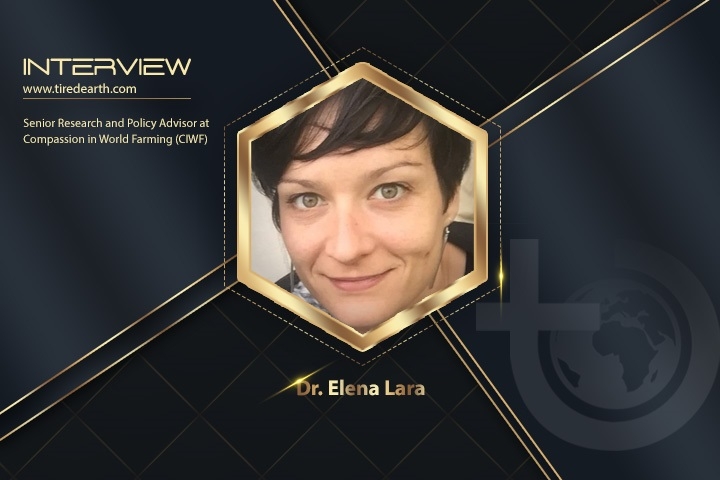
By Selva Ozelli
Dr. Elena Lara, is the Senior Research and Policy Advisor at Compassion in World Farming. Her organisation campaigns against the expansion of carnivorous aquaculture, including Atlantic bluefin tuna octopus. She warns that farming carnivorous species strains wild fish populations, harms marine ecosystems, deprives Global South communities of food, and causes severe animal welfare issues.
Depletion of Wild Fish: Carnivorous species like tuna and farmed octopuses must consume large amounts of wild-caught small pelagic fish (such as sardines and anchovies), either used as a whole or processed into fishmeal and fish oil (FMFO), increasing pressure on wild fish populations and contributing to overfishing.
Impact on Food Security: Diverting wild fish catches to feed luxury aquaculture takes vital protein away from vulnerable coastal communities in the Global South.
Welfare and Slaughter Issues: Research highlights that octopuses cannot be humanely farmed, and there is currently no humane slaughter method for them, leading to recent campaign victories such as the scrapping of plans for a major commercial octopus farm in Gran Canaria, Spain.
Global Campaigns: Just this October, a bill was proposed to ban octopus farming and the expansion of carnivorous aquaculture in Italy, with other bans either passed or proposed in Spain, several US states, Chile and Mexico. Dr.
Lara joins a coalition of scientists, policymakers and NGOs pushing for legislative bans across the EU. Her NGO is also asking policymakers across the world to sign a global "Keep Them Wild" pledge to halt the expansion of carnivorous fish and octopus farms.
Read our reports for more details on the implications of the expansion of carnivorous aquaculture to food security, biodiversity, animal welfare and the environment:
1. Tell us about your educational and professional journey.
I’m a biologist with a PhD in Marine Biology and Master’s degrees in Animal Law and Planetary Health. I started my career in academic research, working on marine ecosystems and the impacts of environmental change. Over time, my interests shifted towards the connection between science, policy, animal welfare and planetary health, particularly how food production affects animals, biodiversity, ecosystems and people. Since 2018, I’ve worked at Compassion in World Farming, where I currently lead research and policy work on food systems, with a particular focus on aquaculture and its impacts on biodiversity, animal welfare and food security.
2. Did you have any role models?
I wouldn't say I've had one particular role model. Throughout my career, I've been inspired by scientists and researchers who are passionate about understanding and protecting nature. I particularly admire those who use their knowledge to drive positive change for animals, people and the environment.
3. Tell us about the most critical ocean sustainability issues: challenge of feeding the future while protecting ocean biodiversity and your side event at COP17.
Aquaculture is often presented as a way of reducing pressure on wild fish populations and supporting food security - but the farming of carnivorous species does the exact opposite. That is because these species require large quantities of wild-caught fish, for feed.
Many vulnerable coastal communities around the world rely on fishing for livelihoods and their diets. As our report, The Growing Threat of Carnivorous Aquaculture shows, the EU imports wild-caught fish from these regions to produce fishmeal and fish oil. Using these fish to produce aquafeeds reduces the affordable protein available to vulnerable communities. The result is that fish once eaten locally are being turned into feed for European farmed carnivorous fish such as seabass and salmon, soon octopus - luxury products mainly consumed in high-income markets. Therefore, this current system is not sustainable and undermines food security rather than improving it.
In addition, intensive aquatic farming systems are linked to chemical use, water pollution, disease outbreaks, escapes of non-native species, and poor welfare standards for farmed aquatic animals. So, under current practices, aquaculture does not automatically improve food security and needs significant reforms to become truly sustainable and equitable.
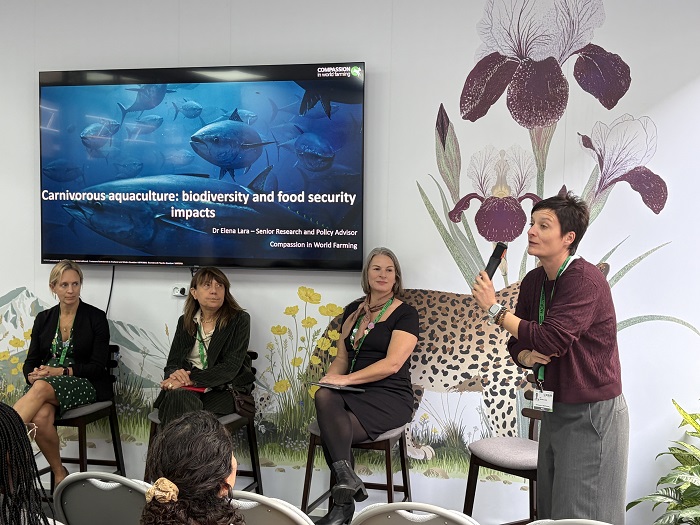
At COP17, we explored the connections between farming high-trophic species in aquaculture and fishing pressure on small pelagic fish populations, highlighting the implications for marine biodiversity and food security. Our speakers outlined the importance of feed fish to ecosystems and presented innovative approaches to biodiversity-friendly aquaculture.
4. By 2050, the global population is expected to reach nearly 10 billion, requiring a 60% increase in food production. Because terrestrial agriculture is constrained by land and freshwater scarcity, the world is increasingly looking to the oceans for food security. What are the challenges?
The challenge is to feed a growing global population without depleting our oceans – or further threatening food security. Due to the reasons outlined above, this must involve a decisive shift away from intensive, high-trophic, feed-based systems.
We recommend instead moving investment and production towards low-trophic, welfare-friendly systems that don’t depend on wild-caught fish for feed. This includes:
Achieving this transition cannot rest on producers alone. It requires coordinated action at national, EU and global level to ensure that animal welfare, food security and ecological integrity are placed at the core of aquaculture development.
5. Overfishing, climate change, and habitat destruction threaten marine ecosystems. Tell us how to balance food production with ocean conservation.
Ocean conservation and aquatic food production must go hand in hand. As mentioned earlier, the key is choosing which species we farm and how we farm them. We need to prioritise production systems that provide nutritious food without putting additional pressure on marine ecosystems, while protecting biodiversity and ensuring long-term food security.
6. Tell us about Sustainable Aquaculture (Regenerative Farming).
Regenerative farming typically refers to land-based farms so is not relevant in this context. Sustainable aquaculture should provide nutritious food while protecting marine ecosystems, biodiversity and animal welfare. Regenerative aquaculture should also aim to improve ecosystem health. I believe the key is moving towards farming species lower in the food chain, such as mussels, oysters and seaweed, which require little or no external feed and can provide important ecological benefits. Aquaculture should work with nature, rather than against it.
7. Tell us about Bivalve Farming of oysters, mussels, and clams which require no feeding.
Bivalve farming is one of the most promising forms of sustainable aquaculture. Mussels, oysters and clams feed naturally by filtering plankton and organic particles from the water, so they don't require additional feed, fertilisers or freshwater, and use very little land. They are also highly nutritious, providing protein, omega-3 fatty acids, vitamins and essential minerals. When properly managed, bivalve farms can improve water quality, increase water clarity and provide habitats for marine species. However, careful planning and management are essential to avoid negative impacts on local ecosystems.
8. Tell us about Seaweed Cultivation of Kelp and algae which absorb carbon dioxide, reduce ocean acidification locally, and provide nutritious food and animal feed without using land, fertilizer, or freshwater.
Seaweed farming is another promising example of sustainable aquaculture. Seaweeds grow through photosynthesis, capturing CO₂ and using sunlight and nutrients from seawater to produce biomass, without requiring agricultural land, freshwater or additional feed. They provide important ecological benefits, such as carbon capture, removal of excess nutrients, improved water quality, reduced ocean acidification locally and habitat provision for marine species.
Seaweed is also a nutritious food, rich in fibre, vitamins and minerals. With proper management, seaweed farming can support marine biodiversity while creating jobs and income for coastal communities.
9. Tell us about Integrated Multi-Trophic Aquaculture (IMTA): This system mimics natural ecosystems by farming fish, seaweed, and shellfish together, where the waste of one species becomes the nutrients for another.
Integrated Multi-Trophic Aquaculture combines different species, such as fish, shellfish and seaweed, in the same farming system. The idea is to mimic natural ecosystems, allowing nutrients and organic waste from one species to be used by others. This can reduce pollution and improve resource efficiency. However, it is important to recognise that if the system includes carnivorous fish fed with wild-caught fish, it does not solve the problem of overfishing for feed. Therefore, the choice of species remains essential.
10. How can Wild Fisheries be transformed?
Compassion in World Farming works solely on farmed animals so we cannot comment on this.
11. Tell us about Marine Protected Areas (MPAs).
Compassion in World Farming works solely on farmed animals so we cannot comment on this.
12. What are the Alternative Feeds for Aquaculture?
Several alternatives to traditional fishmeal and fish oil are being developed to reduce aquaculture's dependence on wild-caught fish. These include by-products from fish processing, algae-based oils, plant proteins and single-cell proteins produced from microorganisms. Insect meal is another option being explored, although it raises animal welfare and sustainability concerns.
However, these alternatives also have limitations, including production costs, environmental impacts and nutritional suitability. We must also avoid replacing wild fish with ingredients that could be directly consumed by people.
Most importantly, alternative feeds alone are not the solution, as they do not address all the environmental and animal welfare concerns associated with intensive carnivorous aquaculture. We should prioritise farming low-trophic species, which require little or no external feed and at the same time, can provide important ecological benefits. These systems offer an opportunity to produce nutritious food, support coastal livelihoods and work with nature rather than against it.
Comparing Solutions: Impact vs. Biodiversity Risk
| Food Source | Potential for Scaling | Biodiversity Risk | Core Benefit |
| Seaweed & Bivalves | High | Very Low | Restores ecosystems & absorbs carbon |
| Fin-Fish Aquaculture | Medium | High (if unmanaged) | High protein yield; requires strict waste & feed control |
| Managed Wild Fisheries | Low (at maximum capacity) | Medium | Supports coastal economies if quotas are enforced |
13. The intersection of feeding the future, protecting ocean biodiversity, and COP31 represents one of the most critical sustainability challenges on the planet. Often dubbed the "Blue COP," COP31 (taking place in Antalya, Türkiye in November 2026) serves as a historic turning point where governments aim to translate global ocean ambition into concrete national action. Tell us about your side event at COP31.
At COP31 we will intervene in two timely side events, with a focus not on aquaculture, but on the issue of sustainable nitrogen management in on-land farming systems. This is the missing puzzle piece in food systems transformation, as it comes with multiple benefits for the climate, health and biodiversity.
| Priority Area | Core Objectives | Impact on Food & Ecosystems |
| The Turquoise Nexus Initiative | A key COP31 initiative bridging food systems, water management, and climate adaptation. | Eliminates fragmentation to ensure agricultural policies protect marine and freshwater runoffs. |
| Integrating NDCs 3.0 | Mandating countries to actively write ocean-based mitigation into their Nationally Determined Contributions. | Expands blue carbon ecosystems (mangroves, salt marshes) to bolster coastal wild fisheries. |
| The 30x30 Goal & BBNJ Accord | Enforcing the High Seas Treaty and protecting 30% of the world's oceans by 2030. | Limits industrial overfishing, allowing apex predators and food webs to naturally regenerate. |
| Equitable Blue Finance | Diverting climate funds toward Small Island Developing States (SIDS) and local fishers. | Funds cold chains, reduces post-harvest losses, and builds localized, resilient food systems. |
14. Anything else you would like to add.
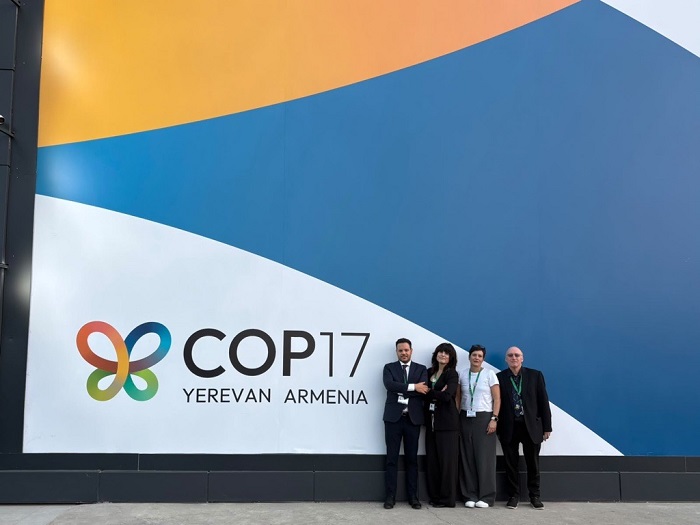
One thing that struck me at COP17 was how little attention marine ecosystems and aquatic food systems received compared with terrestrial ecosystems.
At Compassion in World Farming, we organised a side event, “Feeding the Future While Protecting Ocean Biodiversity”, Together with experts from other organisations, we discussed the importance of small pelagic fish for marine biodiversity and food security, the impacts of fishing for aquaculture feed, and opportunities for more sustainable aquatic food production.
Although aquaculture is recognised under the Global Biodiversity Framework, much more attention and action are needed. Decisions about which species we farm, how we farm them and what we feed them have important consequences for marine biodiversity. Aquatic food systems must become a much more central part of the global biodiversity agenda.
15. How can people reach you?
Media.team@Ciwf.org
Plastic Pollution in Cameroon and Africa Plastic Pollution in Cameroon and Africa

The best of Tired Earth delivered to your inbox
Sign up for more inspiring photos, stories, and special offers from Tired Earth
By signing up for this email, you are agreeing to news, offers, and information from Tired Earth. Click here to visit our Privacy Policy.
Comment
Reply