


14 Nov 2026

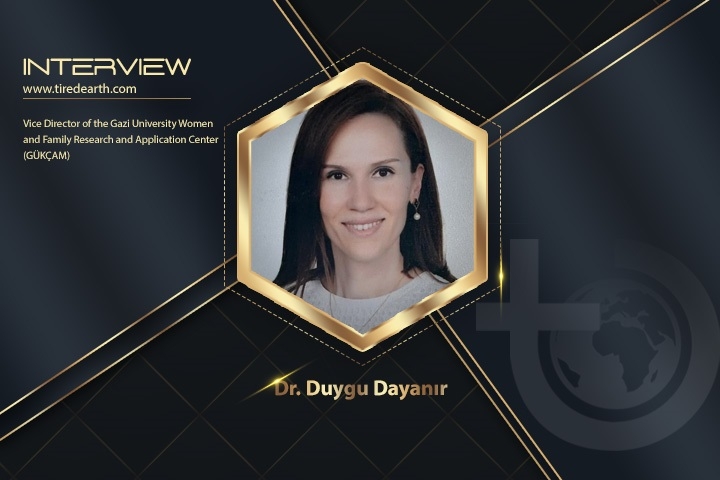
Dr. Duygu Dayanır
Turkish
Understanding how environmental changes affect embryonic development establishes a vital link between embryology, climate awareness, and the conservation of future generations.
By Selva Ozelli
Dr. Duygu Dayanır serves as the Vice Director of the Gazi University Women and Family Research and Application Center (GÜKÇAM) in Ankara, Turkiye.
She is affiliated with the Department of Histology and Embryology at the Gazi University School of Medicine, as well as holding an administrative leadership role at GÜKÇAM alongside Center Director Prof. Dr. Nesrin Çobanoğlu Yüksel.
Air and environmental pollution directly disrupt embryo and fetal development, while climate conferences like United Nations Climate Change Conference (COP31) increasingly highlight how climate change and toxic exposures threaten reproductive health and pregnancy outcomes.
Impact of Pollution on Embryos and Reproductive Health
Air Pollutants and Egg/Sperm Quality: Exposure to fine particulate matter (PM2.5, PM10), organic carbon, ozone, and nitrogen dioxide during gametogenesis (the development of eggs and sperm) damages embryo viability. Studies from Emory University and European fertility research show that high preconceptional PM2.5 and pollutant exposure reduce oocyte survival, lower fertilization rates, and impair blastocyst integrity.
Epigenetic and Genetic Alterations: Research indicates that outdoor air pollutants can induce DNA methylation changes in sperm, altering how genes function without changing the underlying genetic code.
IVF and Early Pregnancy Loss: Acute pollution events—such as wildfire smoke or high urban AQI spikes—correlate with lower live birth rates following frozen embryo transfers (FET) and an increased risk of early pregnancy loss.
Fetal Growth Restriction: Maternal exposure to air pollutants during the first and second trimesters is linked to fetal growth restriction and higher risks of complications like low birth weight and preterm delivery.
Sex Ratio Shifts: Large-scale epidemiological data suggest that heavy metals and air/water pollutants (such as mercury, lead, aluminum, and PCBs) can skew human birth sex ratios by differentially affecting embryo survival.
GÜKÇAM: The Gazi University Women and Family Research and Application Center (Gazi Üniversitesi Kadın ve Aile Araştırma ve Uygulama Merkezi), conducts academic research, symposiums (such as the “University and Women” symposium), and social/institutional projects regarding women and family studies. GUKCAM participates in COP31 under the “Culture at COP31” platform to highlight women’s roles in cultural memory, traditional ecological knowledge, and climate justice. Led by Director Prof. Dr. Nesrin Çobanoğlu Yüksel, the center connects bioethics, public health, and gender equality to the global climate negotiations hosted in Antalya, Türkiye, from November 9 to 20, 2026.
Bioethics and Biopolitics. GÜKÇAM examines how institutional power relations and ethical values determine whose health and environmental needs receive attention during climate transitions.
Cultural Memory and Ecological Knowledge. The center emphasizes women’s intergenerational role in preserving cultural heritage, folkloric medical practices, and traditional agricultural methods that support biodiversity.
Public Health and Climate Justice. Initiatives link environmental hazards—such as pollution and climate-induced disruptions—directly to community resilience, public health outcomes, and gender equity.
1. Tell us your educational and professional journey to become the Vice Director of the Gazi University Women and Family Research and Application Center (GÜKÇAM).
I began my academic journey at Gazi University, where I earned my medical degree and completed my PhD—a path I continue to pursue today. I started my career as a research assistant, subsequently becoming an Assistant Professor in the Department of Histology and Embryology at the Faculty of Medicine, a position I still hold. I am currently pursuing a second doctorate in the field of medical education. I believe his process has clearly broadened my interest in how medical education can better prepare future physicians to understand the impacts of climate change and other environmental issues on health.
My academic interests include histology and embryology, reproductive biology, infertility, oxidative stress, and medical ozone therapy. I also have a particular interest in women’s health and the impact of environmental factors on human health.
As the Deputy Director of GÜKÇAM, I contribute to the center’s initiatives in women’s health—specifically through scientific, ethical, and interdisciplinary perspectives. Having been a student of Prof. Dr. Nesrin Çobanoğlu Yüksel since my undergraduate years, I deeply value the opportunity to work alongside her today. Her unique expertise and extensive experience in the field continue to guide our work at GÜKÇAM and contribute to my own academic development.
I am especially focused on the relationship between environmental conditions and reproductive health. I believe that issues concerning infertility and reproductive health should be examined not only through biological and clinical factors but also in the context of environmental exposures and changes linked to climate change. Addressing these matters—particularly with regard to women’s health and the well-being of future generations—requires an interdisciplinary approach.
2. Did you have any role models?
My late grandfather had a significant influence on my life. His respect for the education of women, and in particular the compassion he showed toward those in need, played a decisive role in shaping my character. He would advise me that knowledge must always be supported by empathy and a sense of responsibility.
These values continue to guide me in my work across the fields of medicine, research, and education. I believe that the responsibility we bear toward human health also encompasses the protection of the natural environment upon which life itself depends. This responsibility is of particular importance for the health and well-being of future generations.
A healthy environment will form the foundation for health—both today and in the future.
3. What is bioethics, and why is it important today?
Bioethics is an interdisciplinary field that examines ethical issues arising from medicine, the life sciences, and scientific and technological advancements. It addresses fundamental principles such as human dignity, human rights, autonomy, informed consent, equality, and social justice. Furthermore, it emphasizes the necessity of maximizing the potential benefits of these advancements for society while minimizing any possible harm.
Today, bioethics is gaining increasing importance, as scientific and technological developments extend beyond individual health to impact society and the natural environment. The UNESCO Universal Declaration on Bioethics and Human Rights highlights the responsibility to consider the interests of future generations and to protect the environment, the biosphere, and biodiversity.
I believe that bioethics is indispensable for ensuring that scientific progress is guided by ethical principles and social responsibility. At the same time, bioethics reminds us that human health, environmental protection, and the well-being of future generations are closely interconnected.
4. Tell us about how how rising temperatures, extreme heatwaves, and air pollution compound risks for pregnant individuals and developing embryos.
High temperatures and heatwaves are significant environmental factors that must be considered even during the fetal stage of human life. Studies have examined the relationship between exposure to high temperatures and pregnancy outcomes, including preterm birth.
Air pollution is another critical environmental issue. Its association with pregnancy outcomes—such as preterm birth, low birth weight, and fetal development—has been extensively researched. Furthermore, the potential effects of air pollution on placental function, as well as its impact on biological processes like oxidative stress and inflammation, have also been investigated.
From an embryological perspective, the early developmental process encompasses interconnected stages, including cell proliferation, differentiation, and organ formation. Exposure to environmental factors during these developmental phases is of great importance, as changes in environmental conditions can disrupt normal developmental processes. The resulting effects vary depending on the type, severity, timing, and duration of the exposure.
High temperatures and air pollution can occur simultaneously. When examining their potential impact on maternal and developmental health, it is necessary to consider these environmental factors as a whole.
Understanding these relationships is crucial for protecting maternal health and supporting the healthy progression of embryonic or fetal development.
5. Tell us about how rising sand and water temperatures also impact animal embryos, such as skewing loggerhead sea turtle hatchling sex ratios toward females and increasing embryo mortality rates at high incubation temperatures.
Sea turtles serve as a significant example of how environmental temperature influences embryonic development. In the species *Caretta caretta* (loggerhead sea turtle), gender is determined by incubation temperature rather than by sex chromosomes—a process known as temperature-dependent sex determination (TSD).
Within the typical incubation range, warmer nest temperatures generally result in a higher proportion of female hatchlings, while cooler temperatures favor the development of males. Consequently, rising sand temperatures can lead to increasingly female-biased sex ratios among hatchlings.
Temperature also affects embryonic survival. Prolonged exposure to excessively high incubation temperatures can increase embryo mortality and reduce hatching success. For instance, a field study conducted in Cabo Verde reported higher embryo mortality rates in *Caretta caretta* nests exposed to warmer incubation conditions.
Other nest conditions—such as humidity, precipitation, sand characteristics, and shading—can also influence incubation temperatures and embryonic development.
Seawater temperature plays a crucial role at a later stage; once hatchlings enter the sea, water temperature can affect their physiological responses and swimming performance during their initial dispersal.
These findings illustrate how environmental temperature can impact both embryonic development and the early-life survival rates of sea turtles. Understanding how environmental changes affect embryonic development establishes a vital link between embryology, climate awareness, and the conservation of future generations.
6. What is the impact of methane pollution on health, and how does this connect to zero waste?
Methane is a potent greenhouse gas that contributes to global warming. It also plays a role in the formation of ground-level ozone—an air pollutant known to have adverse effects on respiratory health. Consequently, the health impacts of methane emissions are primarily indirect, linked through climate change and air pollution.
Methane emissions are also closely tied to waste management. When organic matter—particularly food waste—decomposes in landfills under oxygen-free (anaerobic) conditions, microorganisms produce methane, which can then be released into the atmosphere.
Preventing food waste, separating organic matter, and ensuring its proper processing can reduce the volume of organic waste sent to landfills, thereby helping to limit methane emissions. These practices are key components of "zero-waste" management and contribute to reducing the environmental impact of waste disposal.
7. How has Ankara’s air pollution changed, and what are the implications for embriyo health?
Studies conducted in Ankara have revealed that PM2.5 concentrations fluctuate over time. An analysis of eight monitoring stations indicated an overall decline between 2020 and 2022. Nevertheless, annual average concentrations remained above the annual guideline values established by the World Health Organization in 2021. More recent data from six monitoring stations point to an increase in PM2.5 concentrations during the winter months of 2025.
Regarding reproductive health, exposure to air pollution among expectant mothers has been linked to pregnancy outcomes such as preterm birth and low birth weight. While these findings relate to fetal health, they do not fully elucidate the specific effects on early embryonic development.
Monitoring air quality and understanding environmental exposures—both before and during pregnancy—are of great importance for research into reproductive health and for the protection of maternal and developmental health.
8. Tell us about your COP31 events.
In my capacity as Deputy Director of GÜKÇAM, I participated in activities under the "Culture at COP31" platform. These initiatives explore the interconnections between the knowledge held by women, cultural heritage, public health, sustainability, and climate justice.
On October 25, 2026, GÜKÇAM, in collaboration with Anturia, organized a workshop titled "The Enduring Presence of Women in the Transmission of Cultural Memory: A Bioethical and Biopolitical Perspective." The workshop brought together academics, experts, and students to examine these topics from an interdisciplinary standpoint.
The event addressed a range of interconnected themes, including cultural heritage and women’s knowledge, traditional health knowledge and patient safety, traditional agriculture and biodiversity, climate justice and intergenerational responsibility, and public health and health education.
The workshop concluded with a joint declaration outlining recommendations for these fields. These recommendations included the preservation of cultural heritage, the documentation of traditional health knowledge in alignment with scientific and ethical principles, the safeguarding of biodiversity, and the strengthening of education on climate and health.
A key message emerging from the workshop was that traditional health knowledge must be documented and preserved with a steadfast commitment to scientific evidence, patient safety, and ethical responsibility. Furthermore, the discussions highlighted the vital role women play in preserving and transmitting knowledge, while also emphasizing the importance of including women and young people in research, education, and decision-making processes. For GÜKÇAM, this work reflects the importance of integrating scientific knowledge, cultural experience, and ethical responsibility when addressing public health and environmental issues. At the same time, it underscores our responsibility to protect human health, the natural world, and the well-being of future generations.
9. Anything else you would like to add.
I believe that health issues cannot be considered separately from the environment. For this reason, topics related to climate and environmental health should occupy a much more significant place in medical education. Training future physicians to understand climate-related health risks can help them recognize the environmental factors that affect health and take these risks into account—both in clinical practice and in public health initiatives.
Overcoming these challenges requires collaboration across the fields of medical science, environmental research, and bioethics. Furthermore, it is of great importance to value the contributions that women and younger generations bring to research, education, and the development of solutions.
Human health and environmental health are inextricably linked. Protecting the natural environment is also a way to safeguard the health of future generations. A healthy future depends on both healthy individuals and a healthy environment.
10. How can people reach you?
You can contact me via my institutional email address at Gazi University:
Email: duygudayanir@gazi.edu.tr
Academic profile: https://avesis.gazi.edu.tr/duygudayanir
I would also be pleased to connect with researchers and institutions interested in histology and embryology, reproductive health, medical education, bioethics, and the relationship between environmental factors and human health.
Plastic Pollution in Cameroon and Africa Plastic Pollution in Cameroon and Africa

The best of Tired Earth delivered to your inbox
Sign up for more inspiring photos, stories, and special offers from Tired Earth
By signing up for this email, you are agreeing to news, offers, and information from Tired Earth. Click here to visit our Privacy Policy.
Comment
Reply