



13 Oct 2026
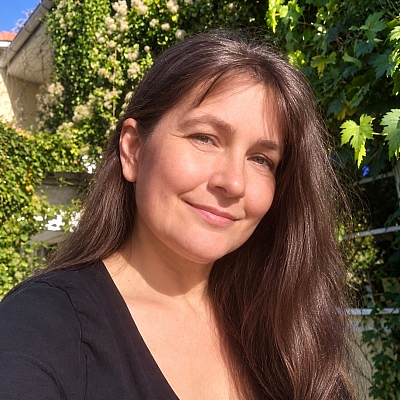
Dr. Angelika Schlager
Austrian
The municipality of Vienna is not interested in handing over these areas cleanly to future generations. So, I joined the Vienna Nature Watch Association and am now the deputy leader in Vienna.

1. Could you tell us a little about yourself and the environmental work you do?
My name is Dr. Angelika Schlager, and I live in Vienna, Austria. I trained as a veterinarian and, in addition to my work as a drug safety officer at Boehringer Ingelheim, I wrote a dissertation on the status of animal shelters, animal sanctuaries and Gnadenhöfe in Austria. Afterwards, I spent a decade working in the Department of Forensic Medicine in Vienna.
I am deeply interested in and concerned about wildlife. This is particularly important in a large city like Vienna, where there are only a few protected areas designated for wildlife.
2. What first motivated you to start picking up litter and caring for the environment?
Twelve years ago, while regularly cleaning nesting boxes, I found plastic packaging from cigarette packs. This prompted me to start cleaning my immediate surroundings every day.
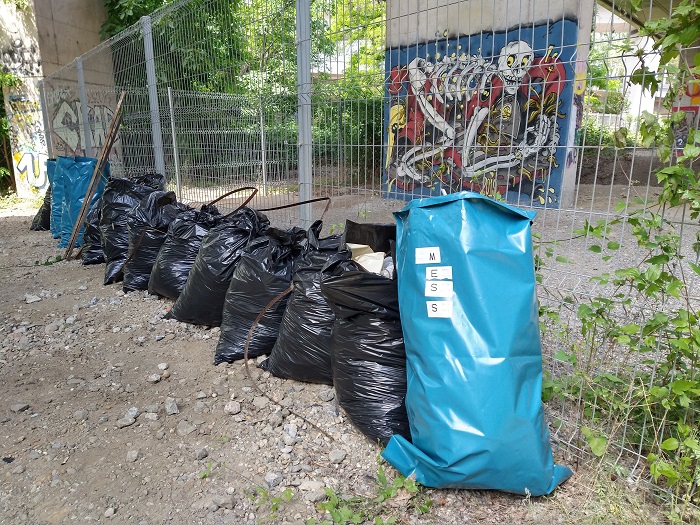
When I discovered a large tent camp in a protected area not far from my home, I began exploring the forest more closely. I found tons of rubbish accumulated in protected areas.
There are three protected areas in my immediate vicinity, each of which is practically a rubbish dump in its own right. Kleehäufel is a gem that still contains a small pond, but an illegal landfill dating back to the 1960s lies next to it. Strictly protected amphibians live in the pond and struggle to survive.
The municipality of Vienna seems uninterested in ensuring that these areas are preserved in a clean condition for future generations. As a result, I joined the Vienna Nature Watch Association and now serve as its deputy leader in Vienna.
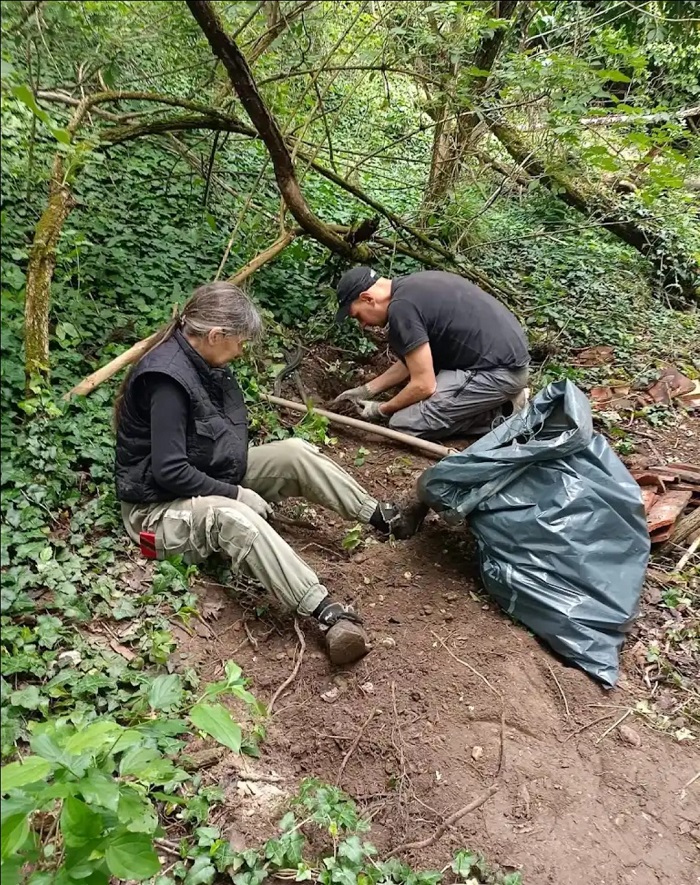
Me with my mate, digging for trash at the landfill
3. What kinds of waste do you encounter most often, and have you noticed any changes in littering over time?
Until the deposit-return system for cans and bottles with a capacity of up to half a litre was introduced in January 2025, these containers were among the most common and widespread types of litter. After about six months, the number of discarded containers had fallen to around one-tenth of its previous level. However, there are still tons of waste at contaminated sites that remain in the soil and have not been removed, even after decades.
For the past ten years, people have been using the bushes as public toilets, and many areas along the Danube have been converted into barbecue areas. As a result, additional tons of waste are generated every day during the season.
Black dog-waste bags, often discarded in the bushes with their contents still inside, are also very common. They are difficult to find because they are not made in bright, easily visible colours.
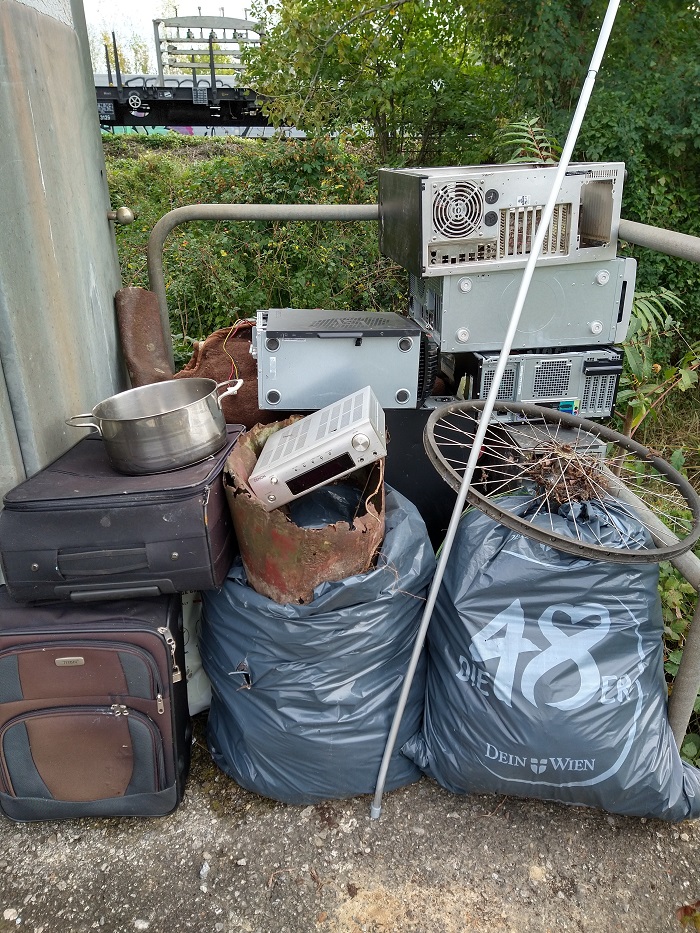
The municipality of Vienna has a recycling facility nearby. However, the fence is inadequate, making it easier for gangs to break in and steal electronic waste, gold-bearing circuit boards and copper cables. Other items that could be reused or sold are also stolen. Anything subsequently deemed unusable is dumped in the adjacent forest.
These gangs also tend to camp in the Mühlwasser protected area during both summer and winter, leaving large amounts of litter behind. Tons of laundry, household waste, bulky waste and electronic waste have also been collected there.
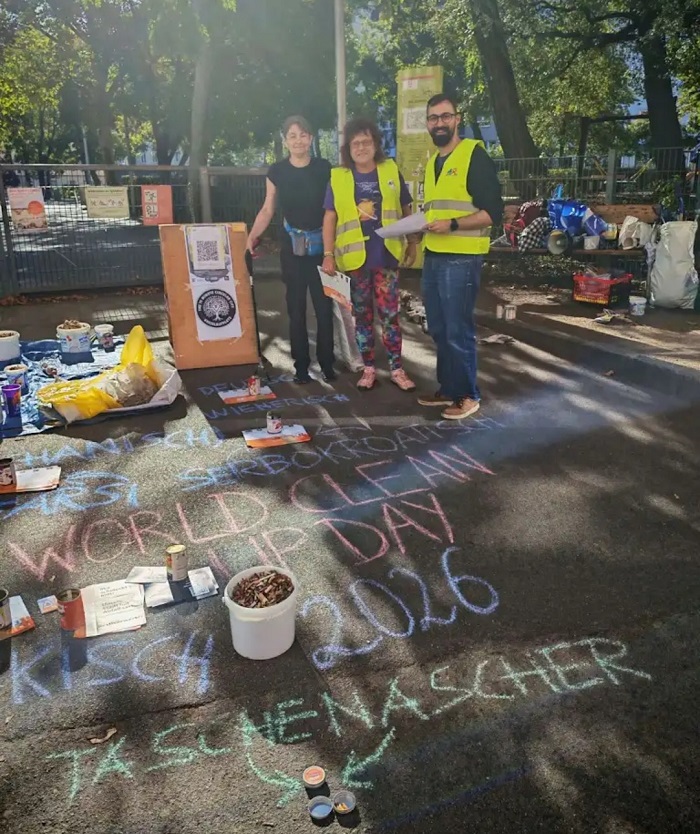
Me on the left, world clean up day 2026
4. You also show concern for animals and wildlife. How does litter and pollution affect them?
Litter harms wildlife primarily through physical injuries, suffocation and poisoning. Cords, rubber bands, fishing lines and plastic rings can become entangled around animals' limbs or necks, causing blood loss, disability or death. Birds sometimes use plastic sheets as nesting material, which can cause their chicks to drown or suffocate when it rains.
Animals often mistake waste for food. Foxes and wild boars, for example, may mistake rubber bands for worms. Ingesting waste can lead to intestinal blockages, starvation despite a full stomach, or internal injuries caused by broken glass and the sharp edges of metal cans.
In addition, leftover food in rubbish bins or along roadsides attracts animals towards roads, where they risk being run over. Animals can also get their heads stuck in cans and starve to death. Cigarette butts and discarded face masks can also pose deadly hazards, contaminating waterways with toxic substances or entangling birds and causing them to suffocate. Balloons can be deadly hazards, too, as they often become caught in trees.
5. What would you like people to understand about littering, and what simple actions can everyone take to help protect the environment?
It is very easy to leave our planet a little better than we found it. Every city has enough public rubbish bins and public toilets. We simply need to use them. When walking in the forest, stay on the main paths and leave the area cleaner than you found it. If everyone picks up one piece of litter a day and disposes of it properly, we can make a significant contribution to protecting the environment.
Vienna has a recycling system, and bulky waste can be taken to designated collection facilities free of charge. Plastic, paper, metal and glass are collected separately.
Residual waste in Vienna is incinerated, and the heat generated is fed into the district heating system. I believe this approach makes sense and is effective.
Littering is a global problem that harms wildlife, contaminates water sources and costs more than $11.5 billion annually in cleanup efforts. It is essential to understand that litter attracts more litter and that even small items, such as cigarette butts, can persist in the environment for years.
Simple actions can make a difference. These include keeping a litter bag in your vehicle, securing rubbish bins with tightly fitting lids and avoiding single-use plastics.
Everyone can contribute to protecting the environment. The motto is simple: Reduce, reuse, recycle.
We at the Vienna Nature Watch are committed to protecting animals and nature. This includes regular cleanups, patrols of protected areas, and monthly meetings. I've been cleaning up my neighborhood and the adjacent protected areas for 11 years. Every week, I have a helper who is invaluable. There are tons of trash everywhere people don't live or go. We've even discovered garbage dumps dating back to the 1970s! Thanks for watching, and I'd appreciate your support with a like or even a subscription!

The best of Tired Earth delivered to your inbox
Sign up for more inspiring photos, stories, and special offers from Tired Earth
By signing up for this email, you are agreeing to news, offers, and information from Tired Earth. Click here to visit our Privacy Policy.
Comment
Reply