Despite dozens of tanker attacks in the Strait of Hormuz since February, the Persian Gulf has not seen an environmental catastrophe on the scale of the 1989 Exxon Valdez disaster. This is no accident—it reflects a deliberate Iranian strategy that balances military pressure against ecological preservation.
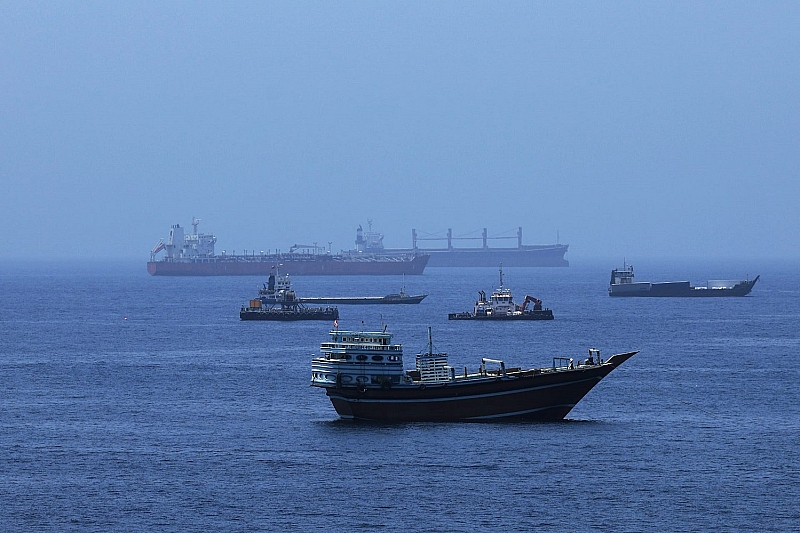
Despite dozens of tanker attacks in the Strait of Hormuz since February, the Persian Gulf has not seen an environmental catastrophe on the scale of the 1989 Exxon Valdez disaster. This is no accident—it reflects a deliberate Iranian strategy that balances military pressure against ecological preservation.
Precision Targeting, Not Environmental Devastation
Since the outbreak of the US-Israeli war against Iran on February 28, the Strait of Hormuz—through which approximately 20% of the global oil supply typically flows—has become a theater of calculated naval conflict. Dozens of vessels have been struck by missiles, drones, and mines. Yet no catastrophic oil spill has followed. The explanation lies not in luck, but in Iran's strategic choices.
"The engine rooms of the ships are deliberately targeted to immobilize them and leave them stranded at sea, without sinking the ship" or causing a major oil spill, The New York Times reported, citing a shipping executive.
Why Target the Engine Room?
The strategy serves multiple calculated purposes:
a) A Military-Political Message Without Crossing the Red Line
By immobilizing tankers, Iran demonstrates its ability to disrupt maritime traffic through the world's most strategic waterway—while signaling it has no intention of turning the Persian Gulf into an environmental disaster zone. This dual message projects both military capability and regional responsibility.
b) Smart Economic Pressure
Disabling a vessel's engine room takes it out of service for weeks or months, driving up insurance and repair costs. This economic pressure, inflicted without causing irreparable environmental damage, serves Iran's broader strategy of what officials describe as "reverse maximum pressure."
c) Self-Interest and Regional Responsibility
The Persian Gulf and Strait of Hormuz are waterways on which Iran and region's own economy, fishing industry, desalination plants, and coastal communities depend. A massive oil spill would mean:
- Destruction of the fishing industry along the Persian Gulf coast
- environmetal Pollution
- Disruption of desalination facilities that provide part of the water needs of coastal areas
- And damage to marine tourism
In an August 12 statement, Iranian Deputy Foreign Minister Kazem Gharibabadi stressed that environmental damage in the strait "further underscores the necessity for Iran to define and implement a management mechanism for the Strait of Hormuz." Foreign Ministry spokesman Esmaeil Baqaei added that "every party that benefits from commercial shipping through the Strait of Hormuz carries both a legal and moral obligation to remediate the environmental harm inflicted."
Precision Weapons Enable Calculated Strikes
To implement this strategy, Iran employs precision weapons designed to limit blast radius: loitering munitions with controlled warheads, cruise missiles with adjustable impact points, and magnetic mines with limited explosive power. These allow targeting of the engine room—typically located at the rear of the ship—without the blast wave spreading to the middle or forward tanks.
The International Law Context
The International Maritime Organization mandated double-hulled construction for tankers following the Exxon Valdez disaster, and many vessels operating in the region meet this standard. However, this alone does not explain the absence of major spills, as double-hulled hulls remain vulnerable to severe explosions or catastrophic collisions. If attackers intended, they could easily target oil tanks with precision missiles.
Iranian environmental officials have also demonstrated rapid response capabilities. After a recent oil slick reached Qeshm Island, authorities reported that the pollution was "almost completely cleaned up," with contaminated sand stripped from beaches and oil slicks removed using specialized absorbent pads.
US Strikes in the Region
While Iran's model focuses on containing pollution and minimizing casualties, US attacks in the region have shown a different pattern:
- The Settebello (confirmed US strike): A US precision munition struck the Palau-flagged tanker near the Strait of Hormuz. Three Indian crew members were killed, and 28 crew members were on board. Iran denounced the attack as "armed robbery and state piracy." The vessel's managers, Dubai-based IOS Marine FZE, disputed the US account, stating no warning communication was successfully established before the strike and rejecting claims of any Iranian affiliation.
- Strikes on Iran's Lavan oil refinery (April 8): US attacks resulted in documented oil contamination reaching the shores of Qeshm, Larak, Hengam, and Hormuz islands.
- A US "ship-for-ship" policy announced in August: American officials stated that "an Iranian oil tanker would be targeted for every ship Iran attacks," further escalating tensions.
The Caroline Bezengi Incident
The Caroline Bezengi case represents a fundamentally different type of incident—one where the result was an unchecked environmental disaster rather than a calculated, limited strike.
The 247-meter tanker, carrying an estimated 800,000 barrels of Russian oil, reported an explosion on June 8 while sailing from Russia's Black Sea port to India. It later ran aground off Oman's Al-Qibliyyah Island on June 30.
Reports describe three explosions on June 6 that flooded the steering gear compartment and pump room, rendering the main engine and steering gear inoperable.
The vessel is part of Russia's "shadow fleet," Which is under sanctions by the EU and the US and is therefore considered a legitimate target for these countries
The spill has been described by experts as potentially becoming "one of the world's worst in years."
Unlike Iran's precision engine-room strikes, the Caroline Bezengi demonstrates precisely what happens when a tanker is disabled without environmental controls—resulting in an unchecked, catastrophic spill.
Iranian Environmental Stewardship in the Strait of Hormuz
In a May 2026 letter to the UN Security Council, Iran's Ambassador expressed "grave concern over the mounting environmental threats" in the Strait, pledging that "as a flag state, Iran is taking all steps to ensure its vessels comply with environmental obligations."
On the International Day for the Conservation of the Mangrove Ecosystem, Iranian officials highlighted the importance of protecting the Persian Gulf's unique mangrove forests, which are home to the emblematic Avicennia marina species. Kamran Pourmoghaddam, spokesperson for Iran's Organization of Natural Resources and Watershed Management, stated that "the effects of this war are being felt directly and indirectly on our rangelands and forests," emphasizing that "the most affected areas are the forests in the south of the country, particularly the mangroves, which are unique in the world."
US and Israeli Attacks on Iranian Environmental Sites
While Iran avoids environmental destruction in its maritime operations, it has accused its adversaries of deliberately targeting natural ecosystems.
Gulf states affected by oil spills:
- Oman's Minister of Environment reaffirmed "the Sultanate's firm and principled position on the need to preserve the marine environment, especially in times of war and armed conflicts."
- Iranian authorities have documented damage to UNESCO-listed biosphere reserves along the Persian Gulf coast.
- Hamid Zohrabi, vice-president of Iran's Department of Environment, has decried the inaction of international bodies: "Some international organizations only ask for reports but remain passive in the face of this situation."
A Delicate Balance
What is unfolding in the Strait of Hormuz is not random warfare but a calculated conflict. By intelligently choosing to target engine rooms, Iran has clearly shown that it seeks to:
- Demonstrate military power
- Exert economic pressure on its adversaries
- Maintain environmental red lines
This reflects Iran's strategic maturity and deep understanding of regional equations. The Persian Gulf is not










Comment
Reply